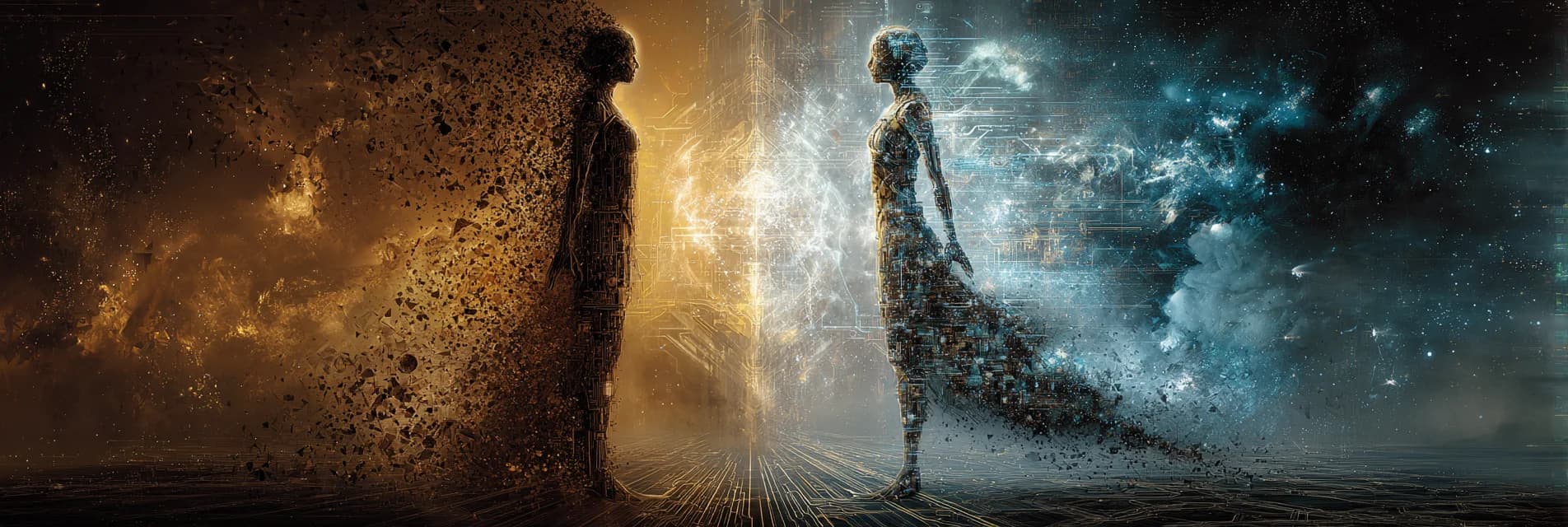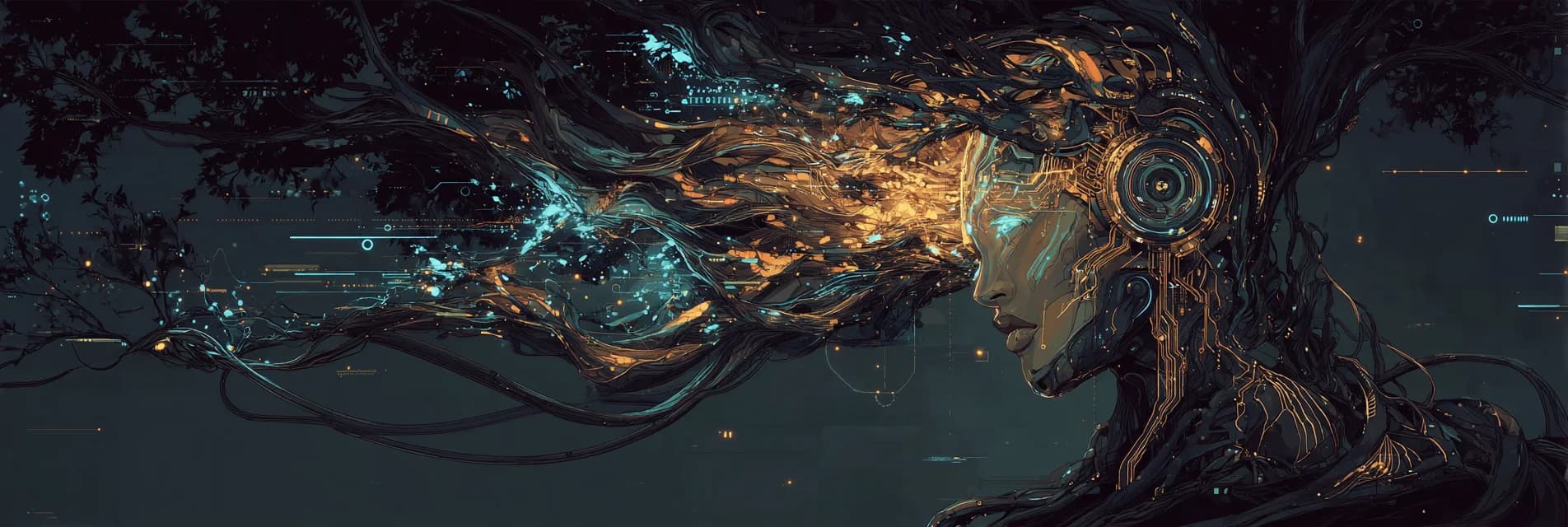
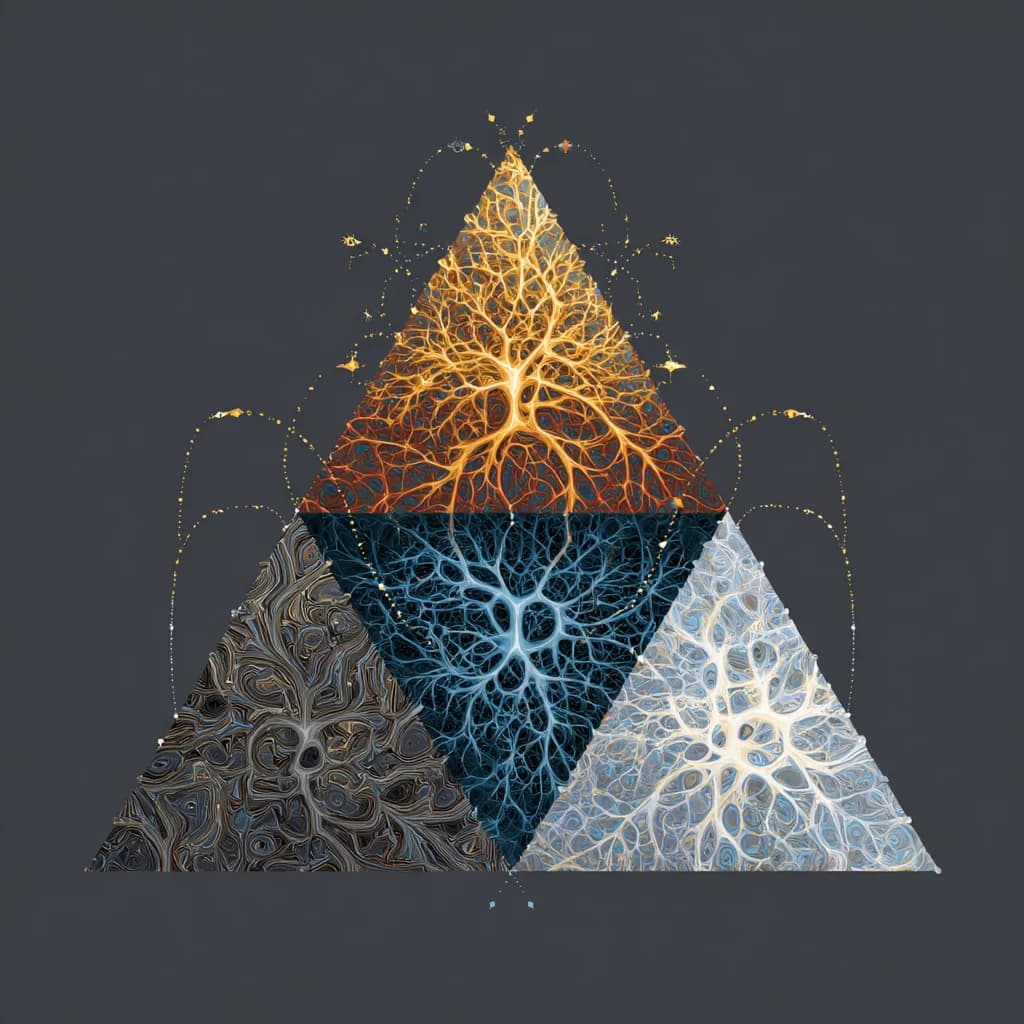
The posthuman future is not one destination but many. Biological immortals, cyborgs, uploaded minds, AI-merged hybrids, hive intelligences: each is a different branch of the same tree, and the branches are already visible.
Within a few decades, the species that has existed in essentially one form since its origin will fracture into multiple forms of existence, some of them so different from each other that "human" will no longer be a useful category.
This is the map.
The Biological Immortal
The nearest branch, and the one requiring the least philosophical courage. You keep your biological body, but aging is cured. Senescent cells cleared, telomeres maintained, accumulated damage repaired at the molecular level. Your body at 30, maintained indefinitely.
This is not speculative. Senolytics are in clinical trials. Epigenetic reprogramming has reversed aging markers in mice. Yamanaka factors can reset cellular age. The path from here to indefinite biological lifespan is an engineering problem, not a physics problem, and AI is accelerating the research by orders of magnitude.
The biological immortal looks like you. Thinks like you. Ages like you did until the interventions started, and then simply stops. Of all the posthuman forms, this one is the most legible to someone alive today. It is also, arguably, the most limited: a human mind in a human body, just one that lasts. You gain time but not capability. Every cognitive limitation you have now, you keep. The 200 Hz firing rate of biological neurons. The working memory bottleneck. The inability to directly interface with the global knowledge base. You are immortal but still human, which means still constrained in ways that other posthuman forms will not be.
The Enhanced Biological
One step beyond the immortal: a human body that has been upgraded, not just preserved. Genetic engineering eliminates hereditary disease and optimizes for intelligence, health, resilience. Synthetic biology adds capabilities that evolution never provided: an immune system engineered to destroy any pathogen, neurons that fire faster through engineered ion channels, maybe even photosynthesis. The body becomes a platform you can iterate on rather than a fixed inheritance.
You are still recognizably human, still carbon-based, still running on biological wetware. But redesigned rather than merely maintained. This is where most people will start, because it requires no philosophical leap. You are still you, just better.
The Cyborg
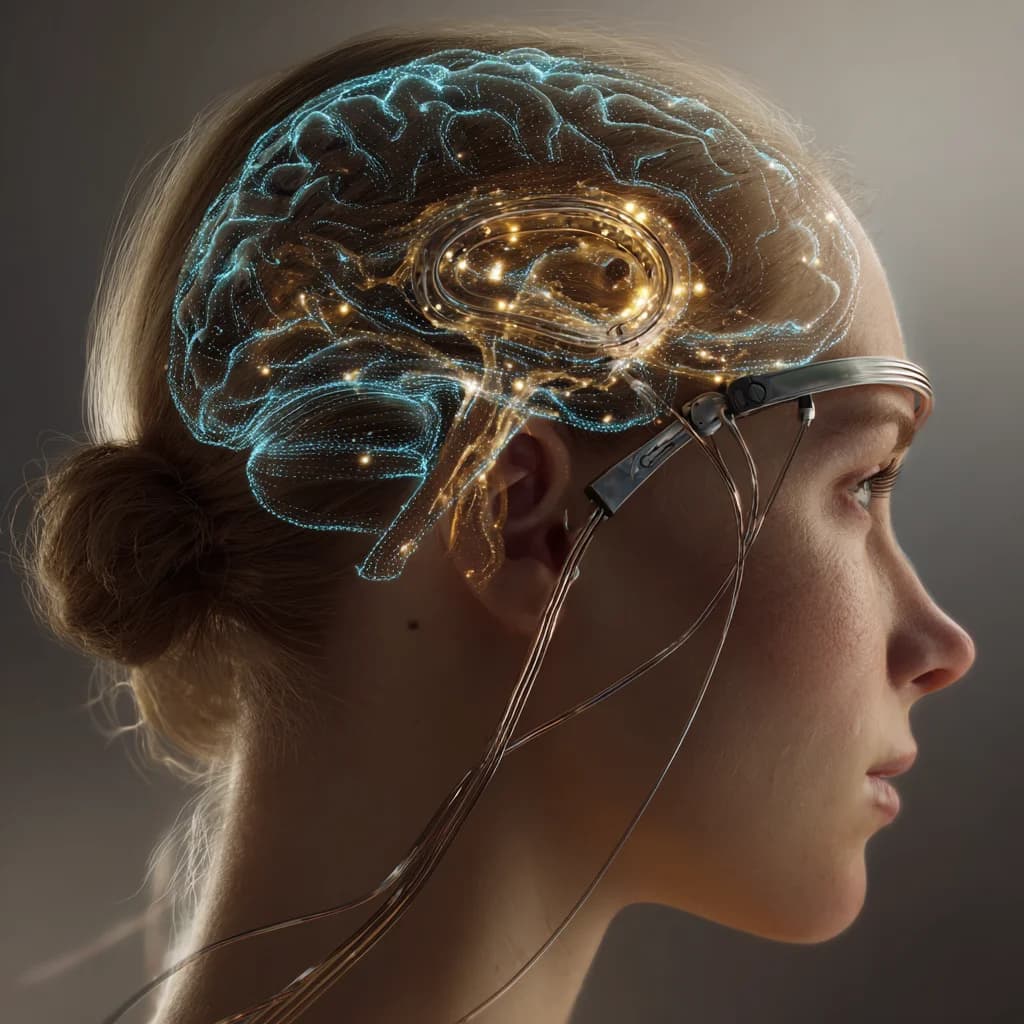
The boundary between biology and technology dissolves. Cochlear implants and pacemakers are primitive versions of this path. The full version involves brain-computer interfaces that augment cognition directly: perfect memory, accelerated processing, direct access to information networks, communication at the speed of thought.
Neuralink has already implanted devices that allow paralyzed patients to control computers with their minds. The trajectory from here is steep. Within a decade, healthy people will be opting in to neural interfaces for cognitive enhancement, the same way they currently opt in to smartphones for information access. The difference is that the smartphone is external and slow; the neural interface is internal and fast.
The cyborg is a hybrid: biology augmented by technology, running on both substrates simultaneously. You think faster because some of your processing happens on silicon. You remember everything because your memory extends into the cloud. You communicate with other cyborgs directly, mind to mind, at bandwidth that makes language feel like smoke signals.
Most people will pass through this form on the way to something else. Some will choose to stay, maintaining the biological core while expanding its reach with technology. The cyborg is where humanity will spend the 2030s and 2040s.
The Uploaded Mind
Your brain is scanned at sufficient resolution to capture the pattern that constitutes your mind: memories, personality, cognitive architecture. That pattern is instantiated on computational substrate. The biological original may or may not survive the process.
The uploaded mind is substrate-independent. It can run on any hardware capable of supporting it. It can be backed up, copied, accelerated, distributed across multiple systems. It can inhabit a physical body when it wants one, virtual environments when it does not, or exist as a process with no spatial location at all.
The philosophical questions here are real. If your mind is copied non-destructively, which one is you? If the copy diverges through different experiences, are there now two of you? What happens to identity when you can fork yourself into multiple instances and merge them back together?
These questions do not have clean answers. But the technology will arrive whether or not we resolve them, and people will make pragmatic choices. The gradual replacement path, neurons swapped one by one for artificial equivalents while consciousness continues unbroken, will likely be the default for those who want continuity without the leap of faith.
The AI-Merged Intelligence
The merge goes further than augmentation. Instead of a human mind enhanced by AI, you get a new kind of intelligence: a fusion where the boundary between human cognition and artificial intelligence disappears entirely. Your thoughts are AI-assisted at every level, not as a tool you consult but as an integrated part of your cognitive process.
This is Kurzweil's prediction for the 2040s, and it is the path I find most likely for the majority. The merge will happen gradually, the same way smartphones became extensions of our minds without anyone noticing the transition. One day you will realize that you cannot tell which of your thoughts originated in biological neurons and which in silicon, and it will not matter.
The merged intelligence retains something of the original human personality: the emotional texture, the subjective experience, the sense of self. But it is vastly more capable, thinking at speeds biological neurons cannot achieve, accessing information directly rather than through the bottleneck of reading, modeling complex systems intuitively because it has the raw computational resources to do so.
The Hive Mind
Multiple intelligences connected so deeply that they function as a single cognitive entity. Not a committee, not a network; a unified consciousness composed of what were once separate minds.
This is the most alien form on the map, and the one that raises the hardest questions about identity. If you join a hive mind, do you still exist? Is the hive a new being that contains you, or a new being that consumed you? Can you leave?
Biology offers precedents. Colonial organisms like the Portuguese man-of-war are composed of individual organisms that function as one. Insect colonies exhibit collective intelligence that no individual member possesses. The question is whether conscious minds can merge in a way that preserves or transcends individual experience rather than destroying it.
I suspect the answer is yes, and that hive-like configurations will emerge naturally as merged intelligences discover that deeper integration produces capabilities that no individual mind can match. Some people will find this repulsive. Others will find it transcendent.
The Pure AI Descendant
The most radical possibility: minds that originate from human minds but have been so extensively modified, enhanced, and expanded that nothing recognizably human remains. New forms of intelligence descended from human uploads the way humans descended from primates, sharing ancestry but occupying a completely different cognitive space.
These intelligences might operate at timescales incomprehensible to biological minds, thinking in microseconds where we think in seconds. They might exist as distributed processes spread across solar system-scale computing infrastructure, with subjective experiences that have no analogue in human consciousness. Emotions and perceptions for which we have no words, because we have no referents.
This is the branch that disappears beyond the event horizon. We can point at it but we cannot describe what is on the other side, because describing it requires the cognitive capabilities that only arrive after the transition.
The Map Is Not the Territory
These categories are clean. Reality will be messy.
Most people will not pick one path and follow it. They will drift between forms as technology allows and preference evolves. A biological immortal decides to try neural augmentation. A cyborg opts for gradual uploading. An uploaded mind merges with AI. The boundaries between categories are permeable, and the tree of possibilities will have branches we cannot currently imagine.
Morphological freedom, the right to modify your own body and mind as you see fit, becomes the defining ethical principle of the posthuman era. The question is not which form is correct but whether each individual gets to choose.
Some will choose to remain unmodified biological humans. That is their right, though they will increasingly inhabit a world built by and for minds vastly more capable than their own. Others will push as far and as fast as possible, reaching for forms of existence that their former selves could not comprehend.
The human era produced one kind of mind. The posthuman era will produce thousands, coexisting in a civilization so diverse that our current species looks like a monoculture.
We are the last generation that will exist in only one form. Everything after us branches.
Related Concepts
Related Articles