Imagine waking up tomorrow and nothing hurts. Not your back, not your knees, not the low hum of anxiety you have carried so long you forgot it was there. No dread about money. No grief sitting in the background like a second heartbeat. No quiet awareness that your body is slowly breaking down, that every year buys you slightly less time than the last.
It is a description of a technical trajectory that is already underway.
Suffering has been the background radiation of human existence for as long as the species has existed. Physical pain, mental anguish, material deprivation, death. Every religion, every philosophy, every coping mechanism ever invented is a response to these conditions. Buddhism frames all of existence as suffering. Stoicism teaches you to endure it. Christianity promises relief in the next life. We have built entire civilizations around managing something we assumed could never be removed.
In 1995, the philosopher David Pearce published "The Hedonistic Imperative," arguing that biotechnology could and should abolish all suffering in sentient life. At the time, it read as radical philosophy. Three decades later, it reads as an engineering roadmap. Pearce's core insight was simple and correct: suffering is not a metaphysical constant. It is a set of biological mechanisms, inherited from evolution, that served adaptive purposes in a world we are leaving behind. Every one of them is being solved.
What Suffering Actually Is
It is worth being specific about what we mean by suffering, because the word is large enough to hide behind.
Start with the body. Chronic disease, injury, the daily grind of a machine that wears out. Roughly 1.5 billion people live with chronic pain. Cancer, autoimmune disorders, degenerative conditions: the body attacking itself or simply failing.
Then the mind. Depression, anxiety, PTSD, grief, loneliness. Nearly a billion people worldwide have a diagnosable mental health condition. Countless more carry subclinical versions: the low-grade anxiety, the seasonal depression, the grief that never fully resolves.
Then material deprivation. Poverty, hunger, homelessness. 700 million people live on less than $2.15 a day. In the richest country in human history, people die because they cannot afford insulin.
Then loss. Aging. The death of people you love. Your own mortality. The quiet knowledge, present from the moment you are old enough to understand it, that everything you build and everyone you care about will be taken from you.
And beneath all of it, the suffering we inflict and the suffering nature imposes. Roughly 80 billion land animals are slaughtered for food each year, most after lives spent in conditions that would be criminal if applied to a dog. Trillions of fish. That is only the suffering humans cause. Nature itself runs on suffering: predation, parasitism, starvation, disease. Every wild animal that has ever lived died of violence, infection, or hunger. Pearce was right to insist that the abolitionist project cannot stop at the human species. A civilization that has the tools to end suffering and limits the project to one species out of convenience has not actually solved the problem.
Each of these is a distinct technical problem. None of them is a law of physics.
What makes this moment different from every previous era of optimism is a single variable: artificial intelligence. AI is the solvent. It accelerates drug discovery, models brain dynamics, optimizes energy systems, and designs molecular structures. Every category of suffering listed above is downstream of problems that AI is already helping to solve, and AI itself is improving exponentially. The tools that exist today are the worst versions we will ever use.
Every One Is Being Solved
Pain is becoming optional. Closed-loop neural interfaces are already modulating pain signals in clinical trials. Spinal cord stimulators have been crude versions of this for decades; the next generation reads neural activity in real time and intervenes before pain registers consciously. Beyond electrical modulation, precision gene therapies are targeting the sodium channels (Nav1.7, Nav1.8) that transmit pain signals. People born with loss-of-function mutations in these genes feel no pain at all. The biology is understood. The intervention is engineering.
Longer term, nanoscale devices operating inside the body will repair tissue damage at the cellular level before it produces pain signals in the first place. The entire concept of chronic pain becomes incoherent when the underlying damage is repaired continuously.
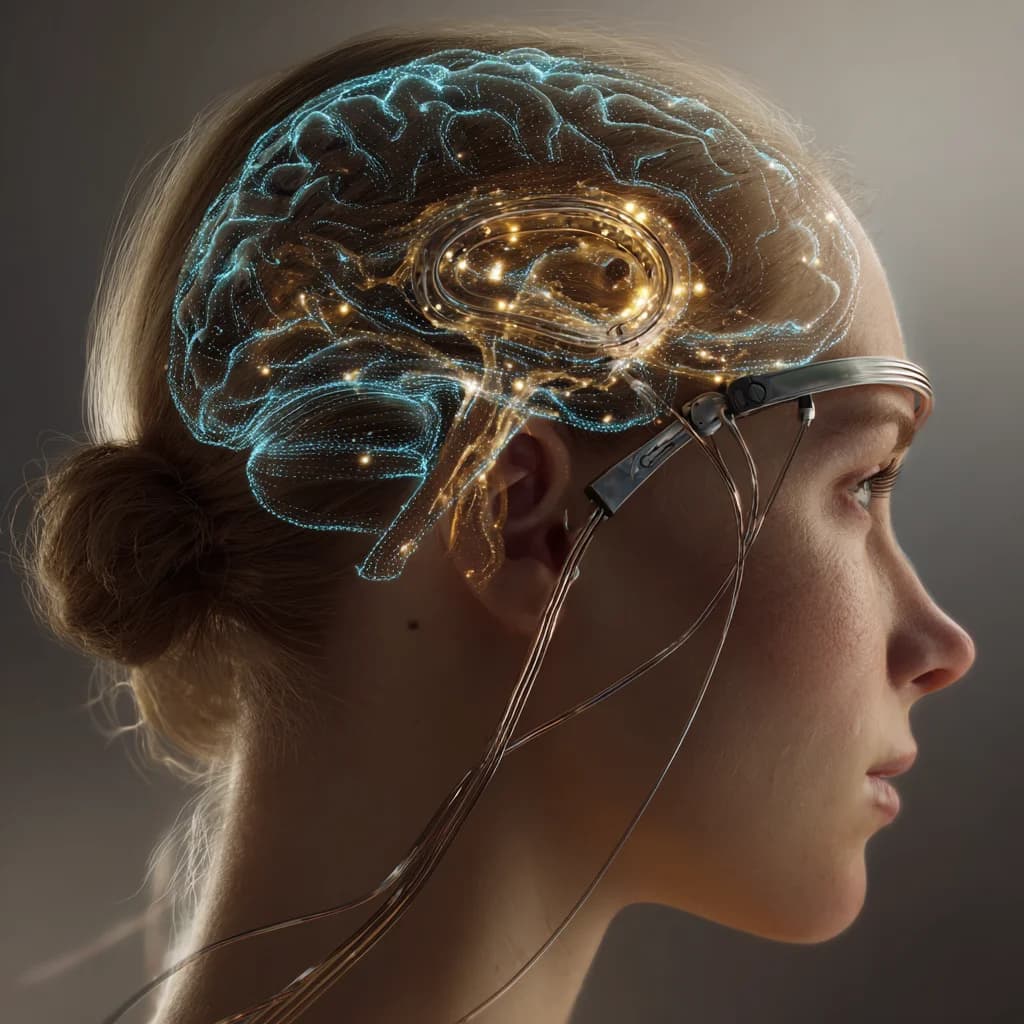
Mental illness is yielding to precision intervention. We are leaving the era of blunt pharmacology, where the same SSRI is prescribed for depression, anxiety, OCD, and PTSD on the theory that serotonin is somehow involved. Brain-state decoding, made possible by high-density neural interfaces and AI pattern recognition, is enabling closed-loop psychiatric intervention: detect the neural signature of a depressive episode or panic attack, modulate in real time, prevent the cascade before the patient experiences it.
DARPA's SUBNETS program demonstrated this approach years ago. Companies like Inner Cosmos are building implantable devices for treatment-resistant depression. Psychedelic-assisted therapy, now in Phase III trials for PTSD and depression, is producing remission rates that pharmacology never approached. And these are the early, crude tools. When AI can model individual brain dynamics with the same fidelity it models protein folding, precision psychiatry will be as routine as precision oncology is becoming.
Scarcity is dissolving. The raw inputs for material abundance are energy and intelligence. Solar energy is on an exponential cost curve that has made it the cheapest source of electricity in history, and it is still falling. AI multiplies the productivity of every person and every process it touches. Combine unlimited cheap energy with superintelligent optimization of production, distribution, and resource allocation, and material scarcity becomes a choice, not a constraint. Molecular nanotechnology, when it arrives, removes the constraint entirely. Molecular assemblers that build products atom by atom from raw feedstock eliminate supply chains, manufacturing inefficiency, and resource scarcity simultaneously. Everything physical becomes a software problem.
And death is retreating. Longevity escape velocity, the point at which medicine extends your life faster than you age, is within reach this decade. AI is the accelerant: designing drugs, predicting protein structures, identifying aging biomarkers, running virtual clinical trials at a pace no human team can match. Senolytics clear damaged cells that accumulate with age. Epigenetic reprogramming resets cellular clocks to a younger state. Gene therapy repairs the accumulated damage that no drug can reach. Each of these approaches is already in trials, and AI is compressing the timeline for all of them simultaneously.
If biology alone cannot get you there, substrate transfer can. Whole-brain emulation, mind uploading, whatever name you prefer for the preservation of consciousness in a non-biological medium: this is the ultimate backstop against mortality. The tools are in development, the physics is understood, and the timeline is aggressive but plausible.
The Rationalization
Here is where someone objects: "But suffering gives life meaning."
This is the most common pushback, and it deserves a direct response.
The argument is an ex post rationalization by beings who had no choice. When you cannot escape a condition, you find a way to frame it as valuable. This is psychologically adaptive. It is not philosophically sound.
Nobody who has experienced severe chronic pain, deep depression, the death of a child, or starvation would choose to repeat that experience for the "meaning" it provided. Ask anyone in the grip of a depressive episode whether their suffering is making them a deeper person. Ask a parent burying their child whether the grief is a gift. The "meaning of suffering" argument is only ever made by people who are not, at that moment, suffering acutely.
The things people actually value, the things they point to when they say suffering gives life meaning, do not require suffering as an input. Growth does not require pain; it requires challenge, and challenge can exist without agony. Connection does not require shared trauma; it requires vulnerability, which is available in the absence of suffering. Purpose does not require endurance; it requires direction.
Beethoven composed his late quartets while deaf. His deafness did not produce the music. His genius produced the music; his deafness made the process harder. We confuse the obstacle with the cause because we have never had the option to remove it.
The end of suffering does not mean the end of depth, complexity, or meaning. It means the removal of noise so that signal can finally come through clearly.
What Remains
This is the most important question, and it is the one almost nobody asks. If suffering is removed, what fills the space?
Everything that was always there, but obscured.
Exploration, for one. When survival anxiety is not consuming your bandwidth, curiosity expands to fill the available space. Imagine minds free to explore mathematics, physics, art, and philosophy without the constant background process of "how do I pay rent" or "what is this pain in my chest." Imagine lifetimes long enough to master multiple fields, long enough that the phrase "life's too short" becomes archaic. And from exploration comes creation: art, science, engineering, music. The drive to create is not a product of suffering; it is a product of consciousness. Every artist in history worked under the constraint of a body that was failing and a clock that was running out. Remove those constraints and see what happens.
Connection deepens when you strip away what distorted it. Love without the shadow of loss. Friendship without the scarcity mindset that makes people compete instead of cooperate.
Wonder is already native to consciousness. A child experiences it constantly, before encountering any significant suffering at all. Play is its close cousin, the oldest impulse after survival and one of the first casualties of a life spent enduring. Animals play. Children play. Adults play less, mostly because suffering and obligation crowd it out. Restore both, and you restore a primary mode of engaging with reality.
And growth chosen freely. This is the important distinction. Growth through suffering is imposed by circumstance; growth in its absence is selected by the individual. The direction, the pace, the domain. Chosen growth is not shallower than imposed growth. It is more intentional, more aligned with what the person actually values, and more sustainable because it does not require breaking someone first.
The Threshold
One hundred billion people have lived and died on this planet. Every one of them suffered. Starvation, plague, grief, slavery, chronic pain, mental illness, the slow indignity of aging, the terror of death. Suffering so pervasive and so constant that we wrote it into our religions as the baseline condition of existence, because what else could we do? We had no tools to change it. We could only endure it, rationalize it, or pray for relief in a life after this one.
That era is closing. Not in some distant century. Now. The tools to end each category of suffering are being built, tested, and deployed within the next few years. For the first time in the history of consciousness, the question is no longer how to endure suffering but whether to permit it at all.
The first generation that gets to answer that question is alive right now. What replaces the longest experiment in endurance will be built by intelligence, biological and artificial, that refused to accept suffering as permanent.
We are about to find out what we actually are when nothing is trying to destroy us.
Related Concepts

Related Articles