Key Points
- •The point where technological growth becomes so fast and self-reinforcing that it transforms civilization irreversibly
- •Originally coined by John von Neumann, popularized by Vernor Vinge and Ray Kurzweil
- •Characterized by recursive self-improvement of AI systems
- •Represents a fundamental discontinuity in human history
- •Kurzweil predicts AGI by 2029 and the Singularity by 2045, and AI progress has repeatedly outrun expert forecasts
Origins of the Concept
The term "singularity" in this context borrows from mathematics and physics. In mathematics, a singularity is a point at which a function takes an infinite value or becomes undefined. In physics, the most famous example is the singularity at the center of a black hole, a point of infinite density where spacetime curvature becomes infinite and the known laws of physics break down. The technological Singularity carries the same intuition: a point beyond which our current models of progress break down and prediction becomes impossible.
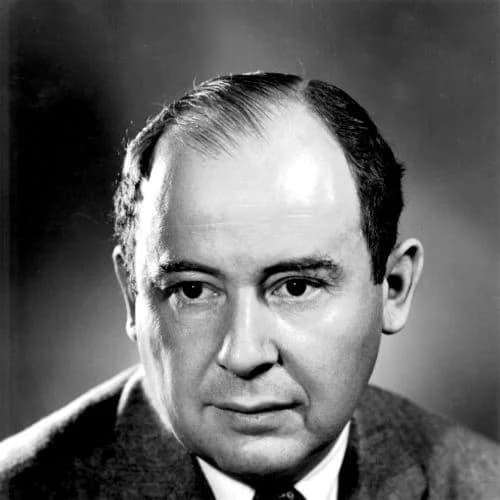
Mathematician John von Neumann first applied this concept to technology in the 1950s. In a conversation recalled by Stanislaw Ulam, von Neumann spoke of "ever accelerating progress of technology and changes in the mode of human life, which gives the appearance of approaching some essential singularity in the history of the race beyond which human affairs, as we know them, could not continue."
Vernor Vinge's Formulation
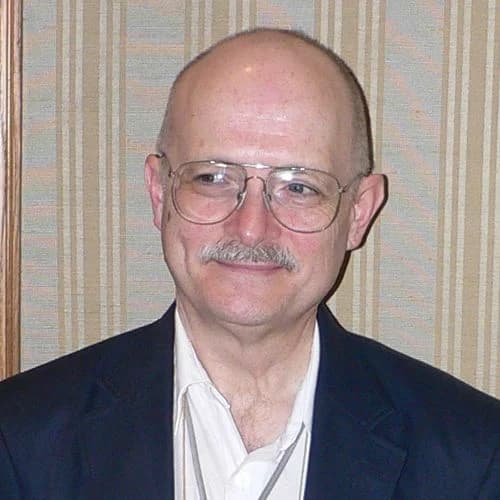
Science fiction author and mathematician Vernor Vinge brought the concept to wider attention in his 1993 essay "The Coming Technological Singularity." Vinge argued that the creation of superhuman intelligence would end the human era, and that this event was likely to occur before 2030.
Vinge outlined several pathways to superintelligence:
- Large computer networks becoming self-aware
- Human-computer interfaces advancing to the point of merging
- Biological science enhancing human intelligence directly
- AI research producing genuinely intelligent machines
Kurzweil's Timeline
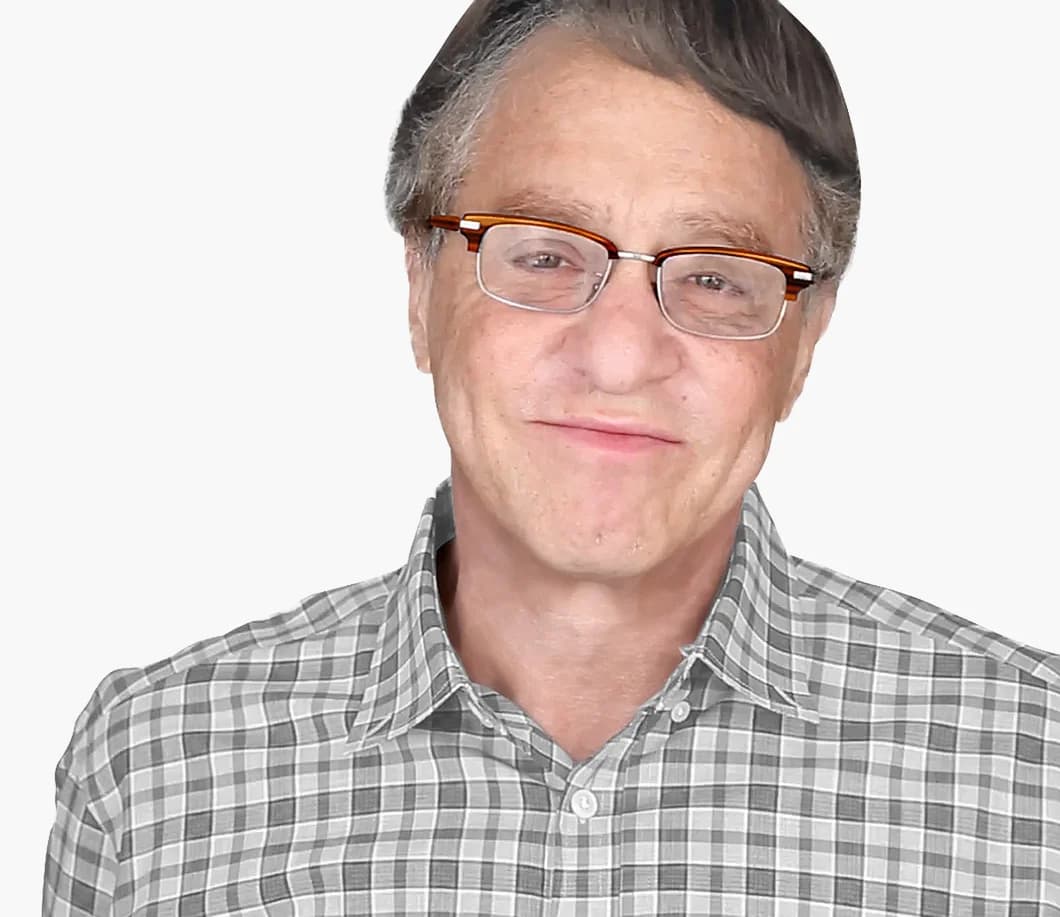
Ray Kurzweil, in his 2005 book The Singularity Is Near, provided the most detailed timeline and framework for understanding the Singularity. In his 2024 follow-up The Singularity Is Nearer, he updated his predictions: AGI by 2029, with the full Singularity by 2045, based on exponential trends in computing power, cost-performance improvements, and the accelerating pace of technological change.
The forecast now has an engine Kurzweil could only anticipate: AI is beginning to contribute to research itself, generating hypotheses, running experiments, and checking results. Formal mathematics shows how far this can reach, because machine-checkable proofs let software verify that every step follows from its assumptions. As AI takes on longer research workflows, the cycle between an idea and reliable knowledge shortens, including the knowledge used to build more capable AI.
Kurzweil's broader predictions include:
- By 2045, a thousand dollars of computation will exceed the capability of all human brains combined
- The distinction between human and machine intelligence will blur through merger
Beyond the Event Horizon
The defining characteristic of the Singularity is unpredictability. Once superintelligent systems exist that can improve themselves recursively, the pace of change becomes so rapid that we cannot meaningfully forecast outcomes.
The candidates are extraordinary:
- Radical life extension or immortality
- The merger of biological and artificial intelligence
- Solutions to previously intractable problems (disease, poverty, scarcity)
- Expansion into the cosmos
- Scenarios we lack the cognitive ability to imagine
Related Concepts
Thinkers Exploring This
Related Articles