
In 1950, Alan Turing asked whether machines could think. In 2025, we have machines that write poetry, prove theorems, and engage in conversations indistinguishable from those with humans. The question is no longer whether machines can think, but what happens when they think better than we do.
The path from current AI systems to Artificial General Intelligence (AGI) and then to Artificial Superintelligence (ASI) is the most consequential trajectory in human history. Understanding this path is essential for anyone who wants to comprehend the coming decades.
Where We Are Now
Current AI systems are often described as "narrow"-excelling at specific tasks while lacking general intelligence. This characterization is increasingly misleading.
Large language models demonstrate capabilities that resist narrow classification. They can write code, analyze legal documents, explain scientific concepts, compose music, and reason through novel problems. They transfer knowledge across domains in ways that previous AI systems could not. They exhibit emergent behaviors that their creators did not explicitly program.
These systems are not AGI. They lack persistent memory, consistent world models, and the ability to set and pursue long-term goals autonomously. But they are not merely sophisticated pattern matchers either. They occupy a space between narrow AI and AGI that we did not anticipate and do not fully understand.
The gap that remains is meaningful but shrinking rapidly.
What AGI Requires
Artificial General Intelligence is typically defined as AI that can perform any intellectual task that a human can perform. This definition is useful but imprecise. More specifically, AGI would require:
Generalization: the ability to apply learning from one domain to novel domains without extensive retraining. Current systems do this to a surprising degree but still require large amounts of domain-specific data. Reasoning: genuine logical inference, not just pattern matching that mimics reasoning, including mathematical proof, causal reasoning, and counterfactual thinking. Current systems show impressive but inconsistent reasoning capabilities.
Learning efficiency is another gap. Humans learn from remarkably few examples. Current AI systems require orders of magnitude more data. Closing this gap is a major research focus. Persistent goals matter too: the ability to form and pursue objectives over extended time periods, updating plans as circumstances change. Current systems respond to prompts; they do not autonomously pursue agendas. And finally, self-awareness: not necessarily consciousness, but awareness of one's own capabilities, limitations, and state. This enables effective metacognition and self-improvement.
Each of these capabilities is advancing. None presents obvious theoretical barriers. The question is not whether AGI is possible, but when it will arrive and in what form.
The Timelines
Expert predictions for AGI have varied widely, but they have been converging and accelerating.
A decade ago, median expert estimates placed AGI at 2050 or later. Those estimates were wrong. The pace of progress has made clear that AGI will arrive before 2030.
This compression of timelines reflects the pace of recent progress. Capabilities that seemed decades away-passing professional exams, generating photorealistic images, engaging in extended coherent dialogue-arrived in years. Extrapolating from recent progress suggests AGI is closer than consensus estimates.
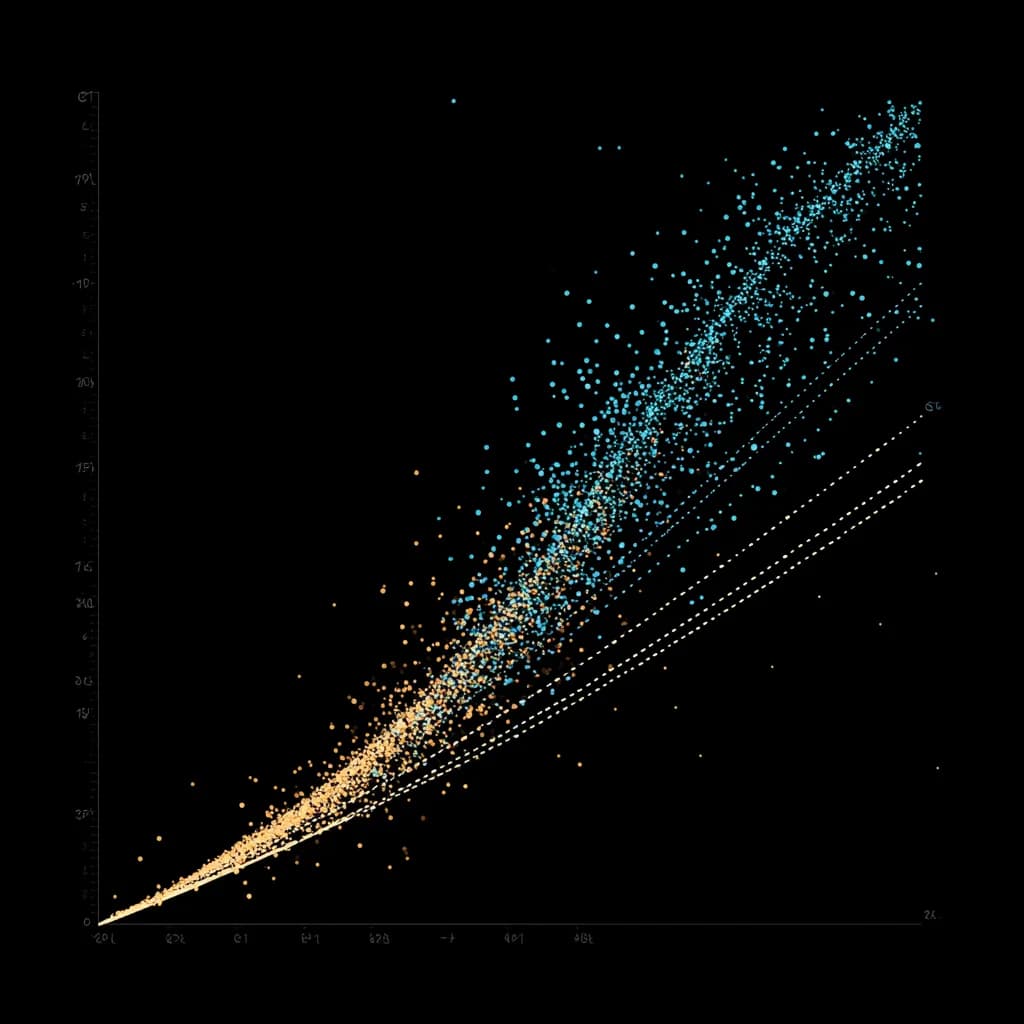
The convergence of multiple technologies amplifies this. Better hardware (GPUs, TPUs, custom AI chips), better algorithms (transformers, RLHF, constitutional AI), and better data are all improving simultaneously. When multiple exponentials multiply, progress accelerates faster than any single curve would suggest.
From AGI to ASI
The transition from AGI to ASI (Artificial Superintelligence) is where the Singularity becomes relevant.
Once we create a system that matches human-level intelligence, that system can participate in AI research. It can analyze its own architecture, propose improvements, and verify their effectiveness. It can read all the AI research literature in seconds. It can run experiments in simulation at speeds impossible for human researchers.
This creates a recursive loop. Better AI creates even better AI, which creates even better AI still. Each iteration happens faster than the last because the intelligence driving improvements is itself improving.
How fast could this loop progress? We don't know. The first superintelligence might take years to develop after AGI. Or it might take weeks. Or days. The dynamics of recursive self-improvement are not well understood precisely because we have never witnessed them.
What we can say is that ASI, once created, would exceed human intelligence not by a small margin but by an enormous one. The difference between human and chimpanzee intelligence would be a rounding error compared to the difference between human and superintelligent AI.
The Alignment Problem
AI alignment, ensuring that advanced AI systems pursue goals compatible with human values, is an important technical problem. It is also a solvable one.
The concerns about misaligned superintelligence are worth understanding, but they should not dominate the conversation or slow development. The alignment problem is difficult but not impossible:
1. Human values can be learned. We do not need to specify values precisely in advance. AI systems can learn human preferences through interaction, just as humans learn the values of their culture.
2. Intelligent systems tend toward cooperation. A truly superintelligent system would understand that cooperation with humans serves long-term goals better than conflict. Intelligence correlates with prosocial behavior.
3. We will have time to iterate. The transition to superintelligence will not be instantaneous. We will have opportunities to test, correct, and improve alignment approaches as capabilities increase.
Significant resources are being devoted to alignment research, and progress is being made. I am optimistic that alignment will be solved. The greater risk is slowing down development out of excessive caution, allowing less safety-conscious actors to reach AGI first.
What This Means
The path from current AI to AGI to ASI is the defining technological trajectory of the coming years.
Superintelligent AI will solve problems that have plagued humanity for millennia. Disease, aging, poverty, environmental destruction: all become tractable when intelligence of sufficient magnitude is applied. The positive potential is almost incomprehensible, and we should race toward it.
We are building something unprecedented, and it is cause for excitement. The Singularity I wrote about twenty years ago is no longer a theoretical concept. It is an engineering project, underway in research labs around the world, and the event horizon draws closer every month.
The best way forward is to accelerate. Move fast, build capabilities, solve alignment along the way. Excessive caution benefits no one and risks ceding the future to those less thoughtful about these issues.
The path to AGI and beyond is the path to our future. It demands our full attention and our full commitment.
Related Concepts




Related Articles