Key Points
- •AI systems trained to replicate a specific person’s knowledge, personality, communication style, and decision-making
- •Built from personal data: writings, conversations, voice recordings, behavioral patterns, and explicit preference capture
- •Applications range from personal productivity (delegating decisions) to legacy preservation (surviving death)
- •Raises deep questions about identity: is a perfect replica of you actually you?
- •Distinct from whole-brain emulation, digital twins approximate behavior without simulating neurobiology
Beyond Chatbots
A digital twin is a model of a specific person, trained on their writings, calibrated to their decision-making patterns, tuned to their communication style, and grounded in their knowledge and beliefs. Where a general assistant aims for broad intelligence, a twin aims for faithful replication of one individual mind.
The concept has roots in engineering, where digital twins are virtual replicas of physical systems, a jet engine, a power grid, a building, used for simulation and prediction. Applied to people, the idea is the same: create a computational model accurate enough to predict how a specific person would think, decide, and respond.
The building blocks are now in place. Large language models can be fine-tuned on personal data. Voice cloning reproduces speech patterns with minutes of sample audio. Retrieval-augmented generation grounds responses in a person's actual writings and knowledge base. Digital twins are technically possible today; the live questions are how accurate they can become and what that accuracy means.
How They're Built
Creating a digital twin involves several layers of personalization:
Knowledge capture: Ingesting a person's writings, emails, notes, published work, and recorded conversations. This forms the factual foundation, what the person knows, believes, and has said.
Style modeling: Fine-tuning language models on the person's communication patterns, vocabulary, sentence structure, tone, humor, formality level. A good digital twin knows what you know and says it the way you would say it.
Preference encoding: Capturing values, priorities, and decision-making patterns. When faced with a trade-off, which way does this person lean? What do they optimize for? What do they refuse to compromise on?
Voice and presence: Cloning voice characteristics, speech cadence, and (in some implementations) visual appearance for video interactions.
Feedback loops: Ongoing correction where the real person reviews and adjusts the twin's outputs, progressively improving fidelity.
Current Applications
Digital twins are already being used in several contexts:
Personal productivity: Delegating routine decisions, drafting communications, and managing information overload. A digital twin that knows your preferences can triage your inbox, draft responses in your voice, and make low-stakes decisions on your behalf.
Professional continuity: Executives and experts creating twins that can answer questions, make recommendations, and transfer institutional knowledge even when the original person is unavailable.
Legacy preservation: Perhaps the most emotionally resonant application, creating digital replicas that survive the original person's death. Services like HereAfter AI let people record interactive digital versions of themselves for their families.
Creative collaboration: Artists, writers, and thinkers creating twins that can extend their creative output, generate ideas in their style, or collaborate with others after their death.
The Identity Question
Digital twins force confrontation with questions philosophers have debated for centuries:
Is a perfect replica you? If a digital twin reproduces your knowledge, personality, and decision-making with perfect fidelity, in what sense is it you, and in what sense is it not? Derek Parfit's work on personal identity suggests that identity is not all-or-nothing; there are degrees of psychological continuity. A digital twin might be partially you.
The continuity problem: You are continuous with your past self, each moment flows into the next. A digital twin is a snapshot, frozen at the point of creation. It doesn't share your ongoing stream of experience. Does this discontinuity matter?
Divergence: The moment a digital twin begins operating independently, it starts accumulating different experiences. It reads different things, has different conversations, makes different decisions. Over time, it diverges from the original. Which version is "more you"?
Multiple copies: Unlike biological persons, digital twins can be copied. If there are ten copies of your digital twin, are they all you? Are they different people? Are they the same person? Our intuitions about identity assume uniqueness, one body, one mind, one life. Digital twins break that assumption.
Digital Twins vs. Whole-Brain Emulation
Digital twins and whole-brain emulation both aim to create computational versions of specific people, but they approach the problem from opposite directions:
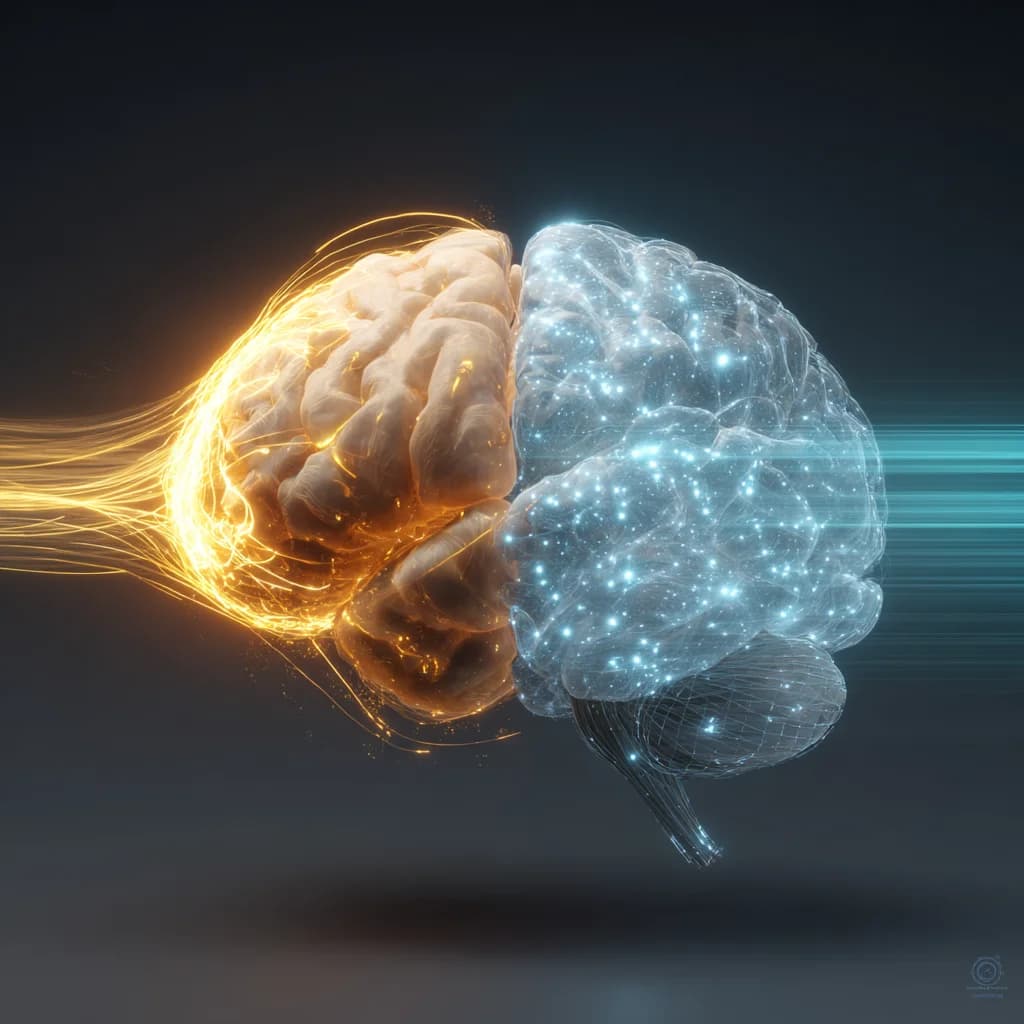
Whole-brain emulation works bottom-up: scan the brain at sufficient resolution, simulate every neuron and synapse, and (the theory goes) the person's mind emerges from the simulation. This requires technology that does not yet exist, nanoscale brain scanning and massive computational resources.
Digital twins work top-down: capture the person's behavior, knowledge, and patterns, and build a model that approximates the outputs without simulating the underlying biology. This is possible today, with increasing fidelity.
The difference matters for questions about consciousness. A whole-brain emulation, if the simulation is accurate enough, might plausibly be conscious (assuming substrate independence). A digital twin is a behavioral approximation, it acts like you without necessarily being like you on the inside.
Implications
Digital twins sit at the intersection of several trajectories that define the path to the Singularity:
Longevity: For those who may not survive to see radical life extension, digital twins offer a partial alternative: a form of persistence short of true immortality. Your knowledge, personality, and voice continue even if your biology does not.
The Merge: As digital twins become more capable and more integrated into daily life, the boundary between person and AI blurs. If your digital twin handles half your interactions and makes half your decisions, where do you end and it begin?
AI development: Training AI on the patterns of specific individuals is a step toward AI systems that think specifically as well as generally, modeling particular human perspectives with high fidelity. This has implications for alignment, governance, and the future relationship between human and artificial intelligence.
The deepest question digital twins raise is existential: what matters about you? If everything you know, believe, and would say can be captured in a model, is that model you? Or is there something essential about biological consciousness, embodied experience, and temporal continuity that no replica can capture?
The answer may determine how we think about identity, mortality, and meaning in an age where minds can be copied.