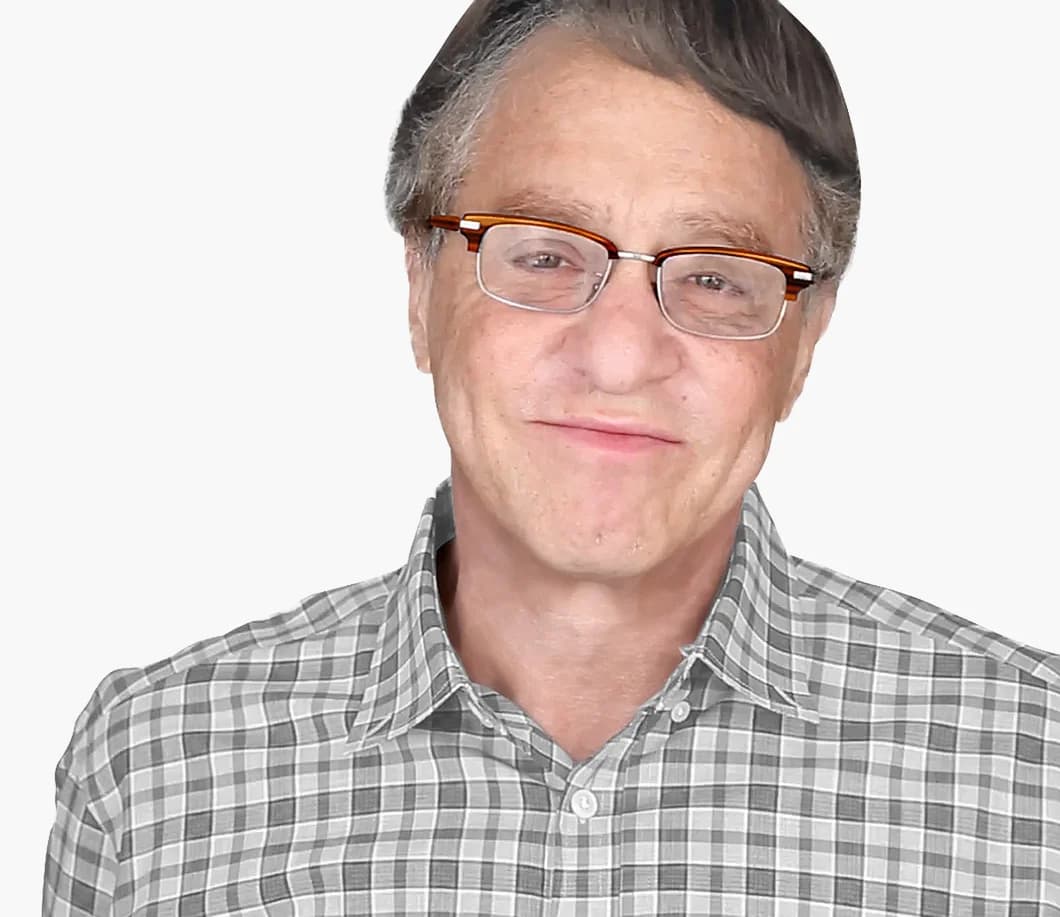
Ray Kurzweil has been predicting technological trajectories since the 1980s with remarkable accuracy. His 2005 book "The Singularity Is Near" synthesized decades of exponential trends into a coherent vision of humanity's technological transcendence. Kurzweil identified the law of accelerating returns as the driving force behind progress in computation, genetics, and nanotechnology. He predicts human-level AI by 2029 and the Singularity by 2045. His work at Google focuses on natural language understanding and machine learning. Whether or not his timelines prove exact, his fundamental insight remains valid: exponential growth changes everything.
Key contributions
- Formulated the Law of Accelerating Returns
- Predicted human-level AI by 2029, Singularity by 2045
- Pioneer in speech recognition and optical character recognition
- Authored "The Age of Spiritual Machines" and "The Singularity Is Near"
Quotes (1)
“The Singularity will represent the culmination of the merger of our biological thinking and existence with our technology, resulting in a world that is still human but that transcends our biological roots.”
The Singularity Is Near · 2005
Predictions tracked (7)
AI will pass a valid Turing test and achieve human-level intelligence by 2029.
Target: 2029 · 80% confidence · pending
The Singularity, a merger of human and machine intelligence, will occur by 2045.
Target: 2045 · 70% confidence · pending
Nanobots will be able to enter the bloodstream to destroy pathogens and repair cells by the 2030s.
Target: 2035 · 70% confidence · pending
By the 2030s, nanobots will connect our neocortex to the cloud, expanding human intelligence.
Target: 2035 · 60% confidence · pending
Molecular nanotechnology will enable desktop manufacturing of most products by the 2040s.
Target: 2045 · 60% confidence · pending
Mind uploading will be possible by the 2040s, enabling digital immortality.
Target: 2045 · 50% confidence · pending
Longevity escape velocity will be achieved by the mid-2030s, adding more than a year of life expectancy per year.
Target: 2035 · 75% confidence · pending