Key Points
- •Hypothetical spacecraft that can replicate using materials found in space
- •Named after mathematician John von Neumann who studied self-replicating machines
- •Could explore entire galaxy in millions of years through exponential spread
- •Their absence is evidence in Fermi Paradox arguments
- •Raises questions about why advanced civilizations haven't filled the galaxy
Exponential Expansion Across the Galaxy
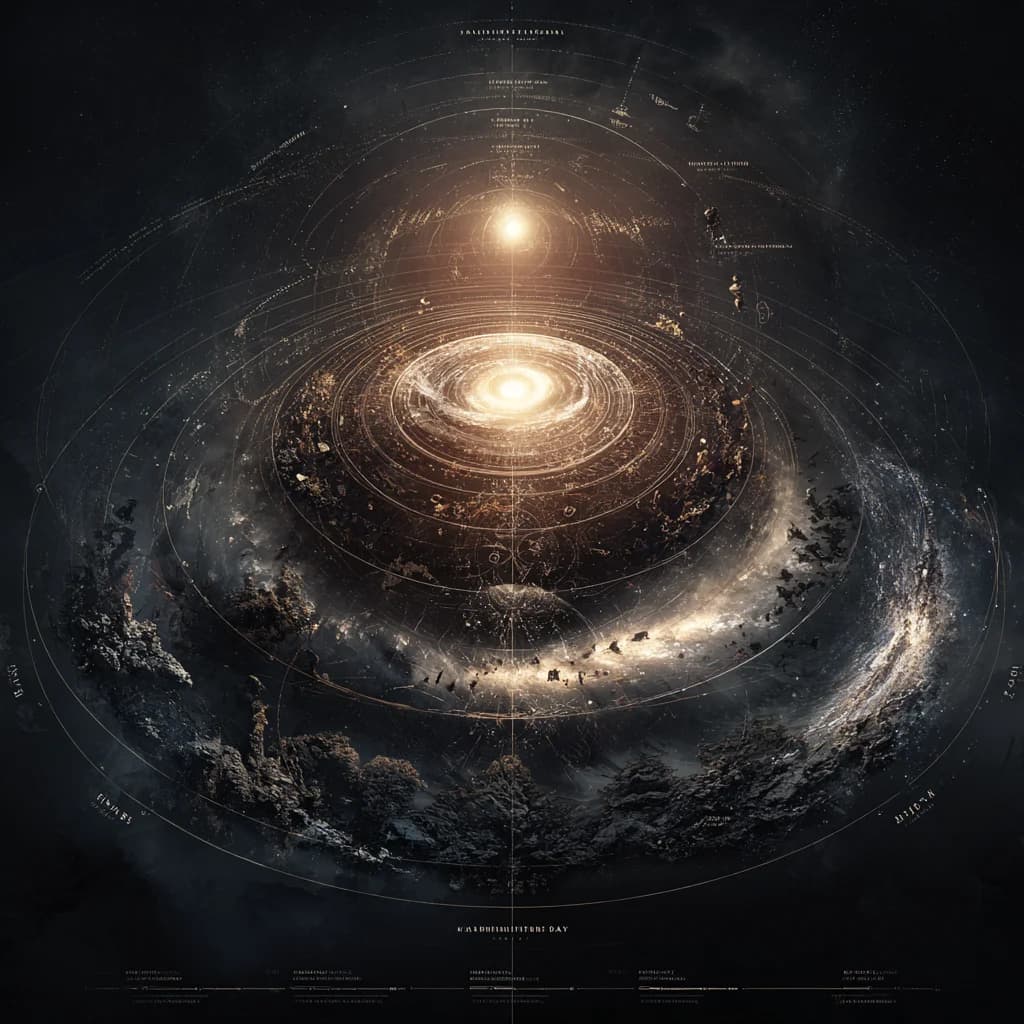
A von Neumann probe is a hypothetical self-replicating spacecraft that could explore and colonize the entire galaxy using exponential reproduction. It is named after mathematician John von Neumann, who developed the theoretical foundations for self-replicating machines.
The concept is central to discussions of the Fermi Paradox: if such probes are possible, why don't we see them everywhere?
How They Would Work
The basic strategy:
1. Launch a probe to a nearby star system
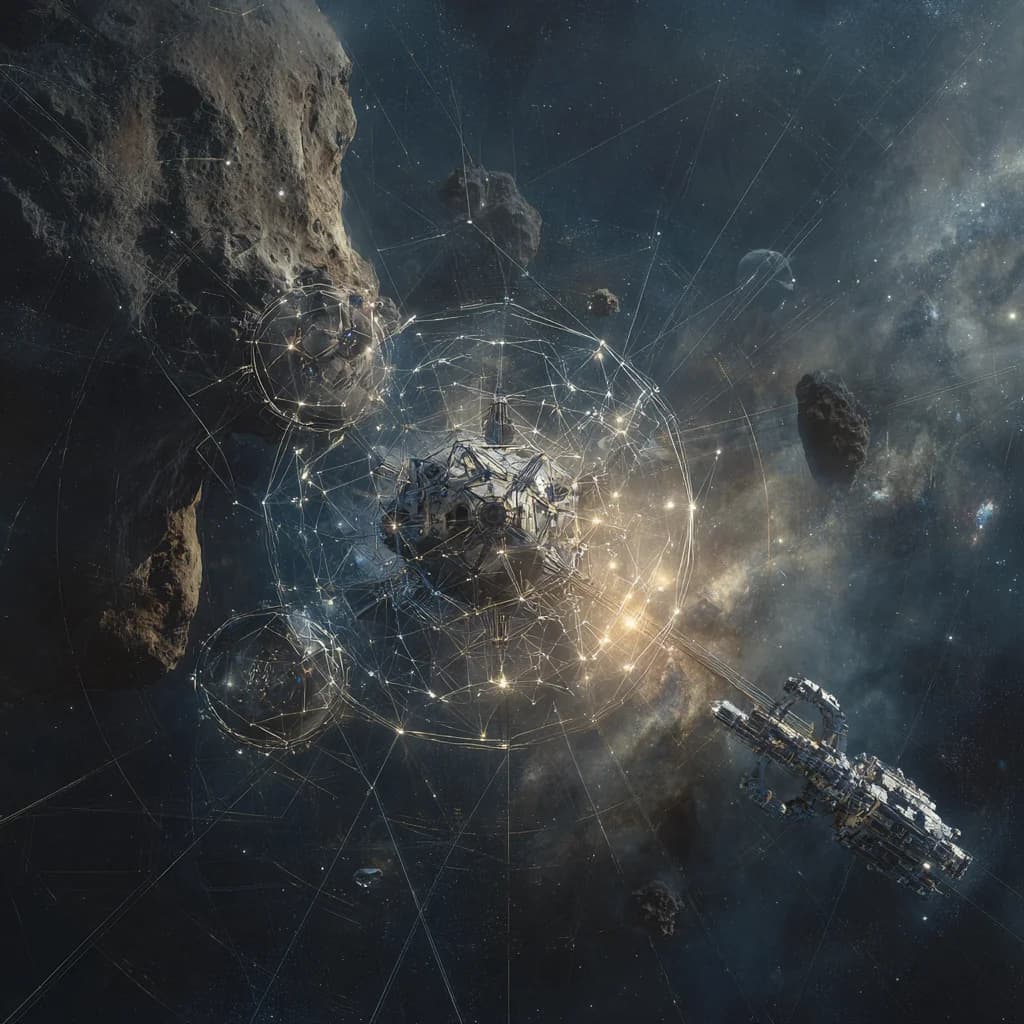
2. Upon arrival, the probe mines local materials (asteroids, moons)
3. It builds copies of itself using those materials
4. Each copy travels to another star system
5. The process repeats exponentially
Even traveling at 10% of light speed, well within theoretical limits, probes could reach neighboring stars in decades. The Milky Way is about 100,000 light years across, but exponential spread means the entire galaxy could be colonized in a few million years.
The Math of Exponential Spread
If each probe takes 100 years to reach a new system and build a copy:
- Generation 1: 1 probe
- Generation 10: ~1,000 probes
- Generation 20: ~1,000,000 probes
- Generation 30: ~1 billion probes
Within 40-50 generations (4,000-5,000 years), probes would outnumber stars. Even accounting for losses and delays, galactic coverage in millions of years is achievable, trivial compared to the galaxy's 13-billion-year age.
The Fermi Paradox Connection
This creates a profound puzzle. If von Neumann probes are:
- Theoretically possible (the physics works)
- Practically achievable (no new physics required)
- Strategically sensible (cheap, effective exploration)
Then any spacefaring civilization should have built them. They should have spread throughout the galaxy billions of years ago. The Solar System should contain alien probes. We should have noticed them.
Yet we haven't. Why?
Possible Explanations
No other civilizations: Perhaps we're alone, or the first.
Civilizations don't expand: Maybe advanced civilizations turn inward rather than outward.
Probes are here but hidden: They might observe without revealing themselves.
Probes are here but unrecognized: We might have seen them without knowing what they are.
Expansion isn't the goal: Perhaps civilizations have no reason to spread physically.
We're in a simulation: Physical expansion might be pointless if reality is computational.
Implications for Humanity
If we survive long enough, we might build von Neumann probes ourselves. They could:
- Prepare destinations for human colonization
- Spread Earth life throughout the cosmos
- Build megastructures and infrastructure at interstellar distances
- Serve as backup copies of human civilization
The choice to build them, or not, might be one of the most consequential decisions our species ever makes.