Earth is fragile. A single asteroid impact ended the dinosaurs. A supervolcanic eruption could plunge civilization into chaos. A pandemic worse than COVID could emerge at any time. Nuclear war remains possible. And on longer timescales, the sun itself will render Earth uninhabitable.
A civilization confined to a single planet has a finite expected lifespan. The longer we remain Earth-bound, the more we roll the dice on extinction.
Given enough time, unlikely events become inevitable. The only way to reduce existential risk to acceptable levels is to spread beyond Earth.
The Case for Expansion
The arguments for space colonization are each compelling on their own terms.
The most fundamental is survival. A multi-planetary species cannot be wiped out by any single catastrophe. Even if Earth became uninhabitable, humanity would continue on Mars, in orbital habitats, or beyond. Then there are resources: the solar system contains essentially unlimited raw materials. Asteroid mining could provide rare earth elements, precious metals, and construction materials in quantities that would make current scarcity meaningless. Solar energy in space is abundant and constant, unconstrained by weather or night.
But the deeper argument is moral. Every world we settle, every habitat we build, expands the total amount of conscious experience in the universe. The moral weight of a single planet is finite; the moral weight of a spacefaring civilization is unlimited.
New frontiers also drive innovation and provide escape valves for social pressure; the closing of the American frontier correlated with increasing social stratification, and new frontiers in space could reverse this trend. And if the Fermi paradox reflects reality, and we are alone in our corner of the universe, then humanity may be the only chance for intelligence to spread beyond its home world. We may carry a responsibility not just to ourselves but to the cosmos.
The Technical Path
Space colonization is often viewed as impossibly distant, but the technical foundations are being laid now.
Launch costs are plummeting. SpaceX has reduced the cost of orbital access by an order of magnitude, and further reductions are coming. Starship, if successful, could bring costs low enough to enable large-scale space development. Mars is reachable with technology that exists today; what remains is engineering, funding, and political will. A permanent Mars settlement within the next two decades is not optimistic; it is conservative.
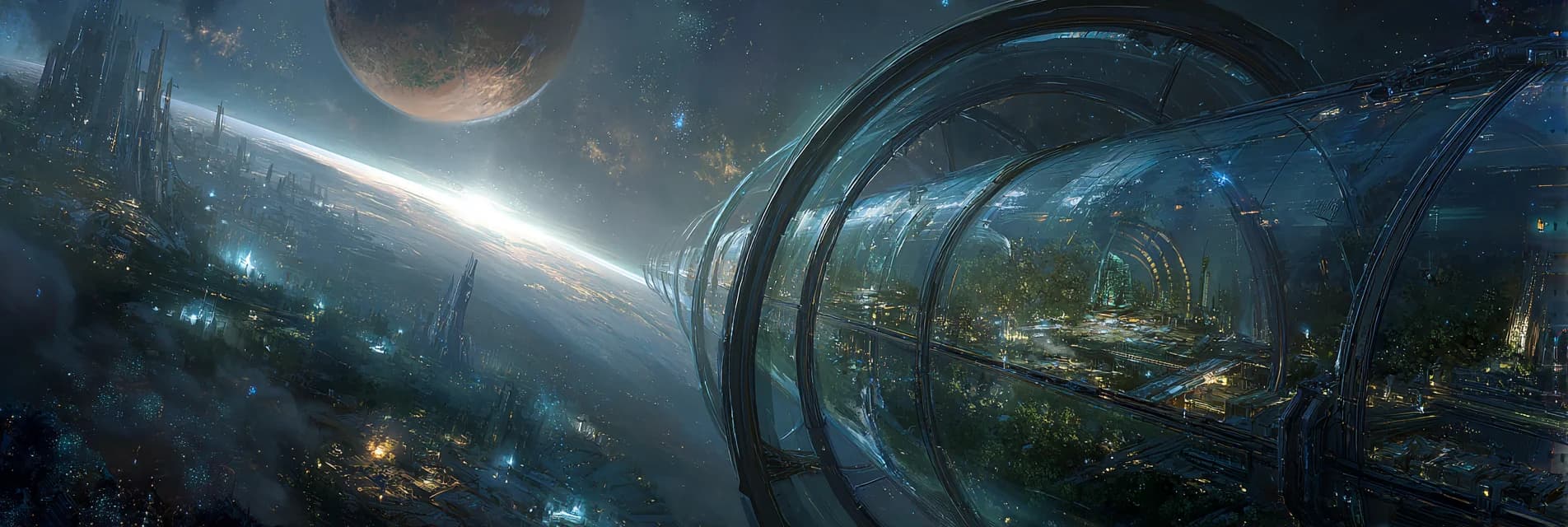
Orbital habitats are feasible. The physics of rotating habitats that provide artificial gravity are well understood. The engineering is challenging but not impossible. O'Neill cylinders or smaller rotating stations could house large populations in Earth-normal gravity. In-situ resource utilization (ISRU) allows spacecraft and habitats to produce fuel, water, and construction materials from local resources rather than bringing everything from Earth, and this is the key to self-sustaining colonies. Life support systems, meanwhile, improve continuously; the International Space Station has operated continuously for over two decades, and closed-loop life support systems that recycle water and air are becoming increasingly efficient.
The Near-Term Vision
By 2075, the following developments will occur.
A permanent human presence on Mars: first research bases, then growing settlements, eventually self-sustaining communities. Mars will become the second home of humanity. Cislunar infrastructure will take shape as space stations, fuel depots, manufacturing facilities, and lunar bases create an economic zone between Earth and Moon. The Moon will be mined for resources and used as a staging area for deeper space missions. Robotic missions will begin extracting resources from near-Earth asteroids; the first trillionaires will be those who control asteroid mining operations. And the first orbital habitats will appear as small rotating stations prove the concept, with larger habitats following as construction capability develops.
None of this requires breakthrough physics. It requires only the continued development of technology that already exists.
The Long-Term Vision
On longer timescales, the possibilities expand dramatically.
Mars could be transformed into an Earth-like planet over centuries. Venus will be modified through atmospheric processing. These are projects for civilizations, not generations, but they are not physically impossible. Eventually every planet, moon, and asteroid could host human habitation in some form. The total human population could expand by orders of magnitude without overcrowding any single location.
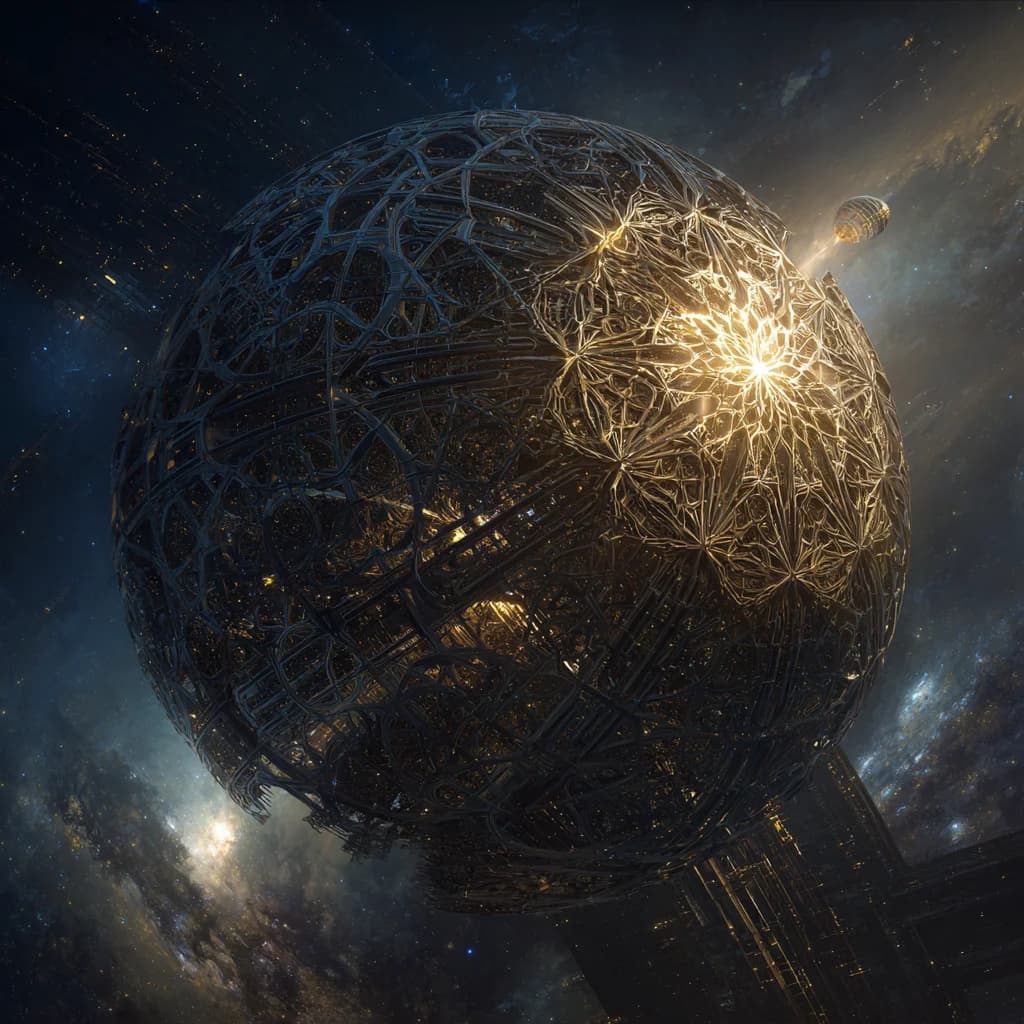
Even without faster-than-light travel, generation ships or uploaded minds transmitted at light speed could reach other star systems. The galaxy could be colonized in millions of years, a blink of an eye in cosmic terms. Civilizations could eventually capture most of the energy output of their star through Dyson swarms, supporting populations measured in quintillions and computational capacity beyond current imagination.
These are not fantasies. They are extrapolations from physics and engineering. The only question is whether we choose to pursue them.
The Moral Imperative
Space colonization is sometimes criticized as escapism, a distraction from solving problems on Earth. This criticism misunderstands the argument.
We should solve problems on Earth. We should also expand into space. These goals are not in conflict; they are complementary. The technologies developed for space often benefit life on Earth. The resources of space can solve scarcity on Earth. And no amount of problem-solving on Earth eliminates the existential risk of remaining planet-bound.
Furthermore, the expansion of conscious experience has intrinsic moral value. More minds experiencing more of existence is better than fewer minds confined to one fragile world. This is not about abandoning Earth; it is about ensuring that the project of consciousness does not end with Earth.
The Connection to Transcendence
Space colonization connects directly to transhumanist goals. The environments of space are hostile to unaugmented humans. Long-term space habitation will require biological modification, cybernetic enhancement, or transition to non-biological substrates.
A species that spreads across the solar system will not remain human in the current biological sense. The radiation environment, the distance from Earth, the need for self-modification will drive evolution and enhancement. Space colonization and human enhancement are not separate projects; they are the same project viewed from different angles.
Eventually, the distinction between human and AI, between biological and technological, will dissolve in the context of space settlement. The entities that colonize other star systems may be uploads, AIs, hybrids, or something we cannot yet imagine. What matters is that they will carry forward the project of intelligence.
Personal Reflection
Once biological limitations are transcended, timescales change. A century becomes a reasonable planning horizon. A millennium becomes imaginable. The question shifts from "will I live to see this?" to "what will I choose to experience?"
I choose acceleration. I will personally benefit from space colonization, and I intend to participate in it. The cosmos is the next chapter of existence for those of us who refuse to accept biological constraints as permanent.
I intend to be there.
Related Concepts
Related Articles