Key Points
- •The apparent contradiction between the high probability of alien life and lack of evidence
- •Given the age and size of the universe, we should have encountered aliens by now
- •Named after Enrico Fermi who asked "Where is everybody?" in 1950
- •Possible explanations: rare Earth, great filters, zoo hypothesis, simulation
- •Has implications for humanity's future and existential risk
The Silence of the Cosmos
In 1950, physicist Enrico Fermi was discussing UFOs with colleagues at Los Alamos when he asked a simple question that has haunted scientists ever since: "Where is everybody?"
Given the vast age and size of the universe, with hundreds of billions of stars in our galaxy alone and billions of years for life to develop, we should have been visited by alien civilizations, or at least detected their signals, their probes, or their megastructures. Yet we see nothing. The apparent contradiction between the high probability of alien life and the complete absence of evidence for it is the Fermi Paradox.
The Numbers
The universe is about 13.8 billion years old. Earth is 4.5 billion years old. The galaxy contains roughly 200-400 billion stars, many with planets in the habitable zone.
Even at subluminal speeds, a civilization could colonize the entire galaxy in a few million years, a blink in cosmic time. If intelligent life arose even a few times in the galaxy's history, they've had plenty of time to spread everywhere.
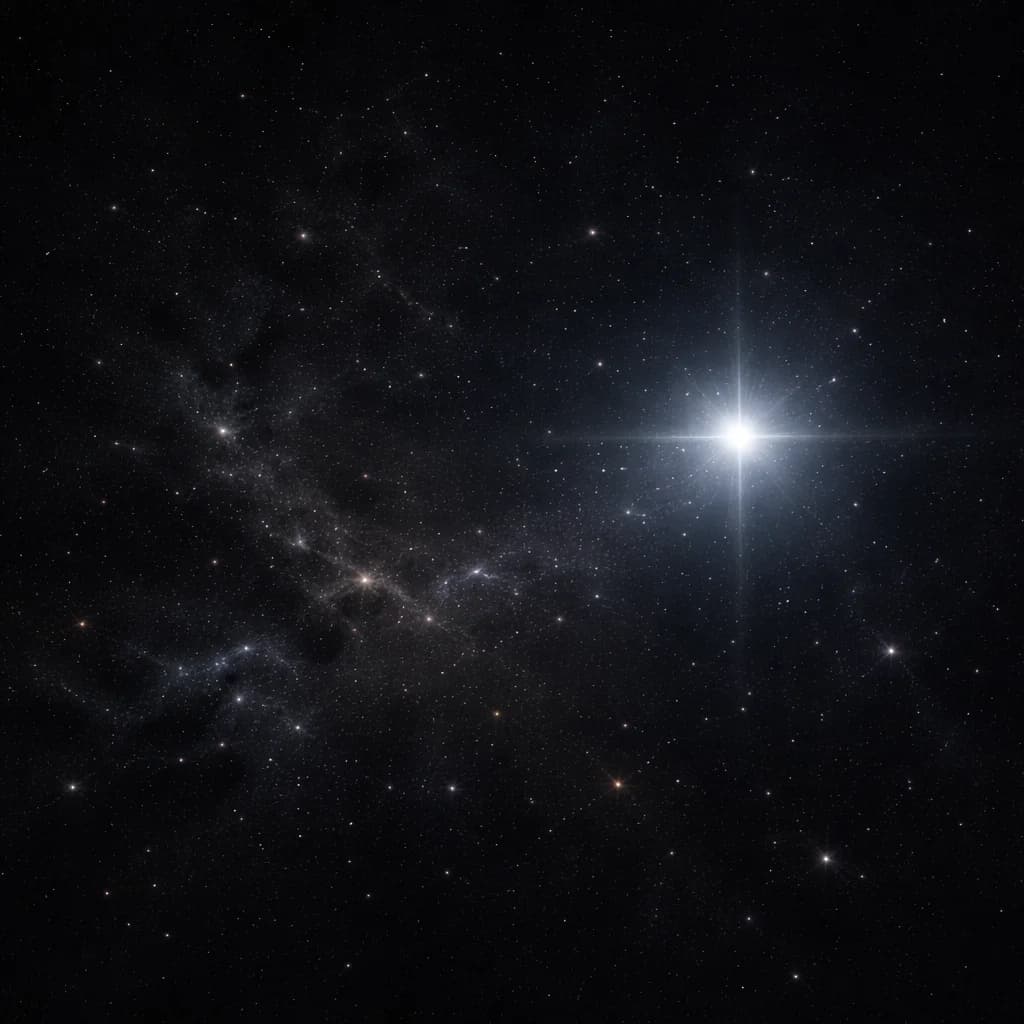
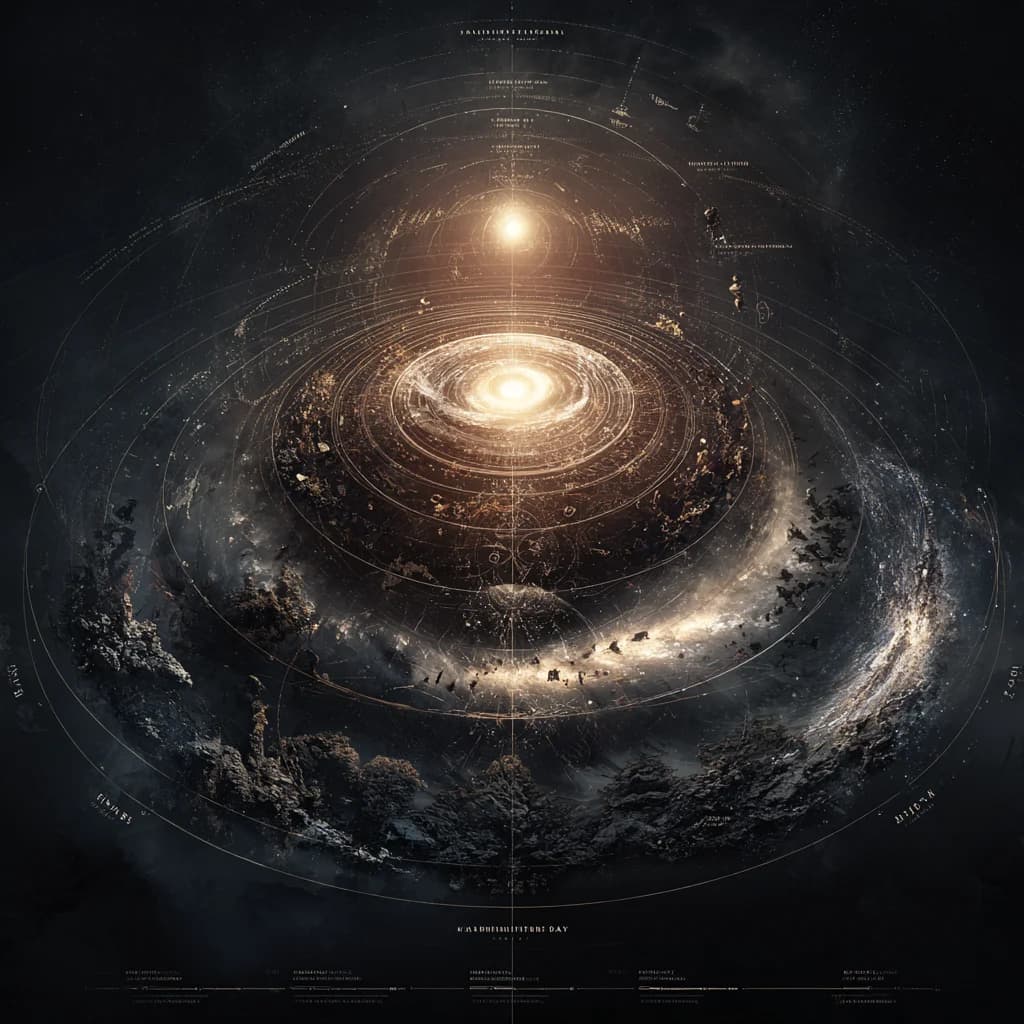
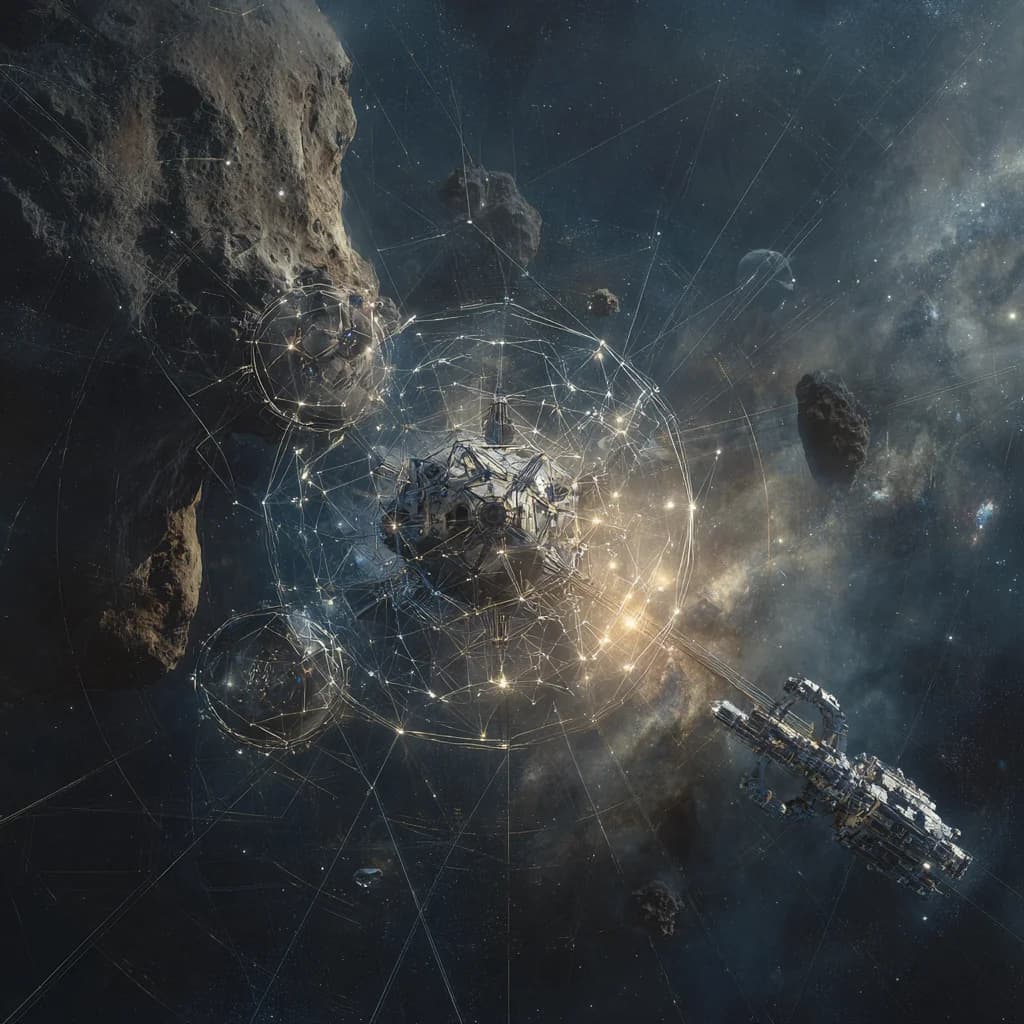
Yet SETI has found no signals. We see no Dyson spheres. No alien probes have visited. The sky is silent.
Proposed Explanations
We're early: Perhaps intelligent life is genuinely rare and we're among the first civilizations in the universe. Robin Hanson's "grabby aliens" model argues this is exactly what we should expect: if expanding civilizations eventually fill the universe, observers like us can only arise early, before the expansion arrives. We may be the pioneers.
We're alone: Perhaps the conditions for intelligent life are so unlikely that we may be unique in the observable universe.
The Great Filter: Something prevents civilizations from spreading, they destroy themselves, hit technological limits, or face some barrier we haven't encountered yet.
Zoo hypothesis: Advanced civilizations are watching but not interfering, like wildlife preserves.
Different interests: Perhaps advanced civilizations don't expand physically, they might turn inward into simulations, upload to virtual realities, or pursue goals we can't imagine.
We haven't looked hard enough: Our SETI efforts have examined only a tiny fraction of possible signals and locations.
They're hiding: Perhaps interstellar space is dangerous, and civilizations that advertise their presence get destroyed.
Implications for Humanity
The Fermi Paradox constrains our expectations about the future:
- If the Great Filter is ahead of us, powerful technology may be inherently self-destructive
- If we're genuinely early, we have both opportunity and responsibility as potential founders of cosmic civilization
- The nature of intelligence may be fundamentally different from what we imagine
The absence of alien signals is one of the most important data points we have about the long-term future of technological civilizations, including our own.