Key Points
- •Coined by David Chalmers: why is there "something it is like" to be conscious?
- •Easy problems: explaining behavior, cognitive functions, neural correlates
- •Hard problem: explaining why these processes produce subjective experience
- •Critical for mind uploading: would a simulation be conscious?
- •Major theories: physicalism, dualism, panpsychism, illusionism
The Explanatory Gap
Why does the taste of coffee taste like that? Why does red look like that? Why is there any subjective experience at all rather than biological processes occurring "in the dark"?
The hard problem of consciousness, named by philosopher David Chalmers in 1995, is the problem of explaining why physical processes give rise to subjective experience, the felt quality of what it's like to be conscious.
Easy vs. Hard Problems
Chalmers distinguishes "easy" problems from the hard problem:
Easy problems (relatively speaking):
- How does the brain discriminate stimuli?
- How does it integrate information?
- How does it report on mental states?
- How does attention work?
These are scientifically tractable. We can study the mechanisms, build models, and test predictions.
The hard problem:
- Why is all this information processing accompanied by experience?
- Why doesn't it just happen without anyone being "home"?
Even a complete neuroscience of perception wouldn't explain why there's something it feels like to see red.
Why It's Hard
The hard problem seems to resist scientific explanation because science explains one thing in terms of another: chemistry in terms of physics, biology in terms of chemistry. But experience seems to be a fundamental category that can't be reduced to something else.
Imagine an alien scientist who understands every physical fact about humans but has never experienced consciousness. Could they deduce from physics that consciousness exists? Many argue they couldn't, that subjective experience is something over and above the physical facts.
Proposed Solutions
Physicalism/materialism: Consciousness will eventually be explained by neuroscience. The hard problem is just a gap in our current understanding. The sense that consciousness is special is an illusion.
Dualism: Mind and matter are fundamentally different substances. Consciousness can't be reduced to physics because it's not physical.
Panpsychism: Consciousness is fundamental and ubiquitous, present in all matter to some degree. Complex consciousness emerges from simple proto-consciousness.
Illusionism: Consciousness as we conceive it doesn't exist. We're confused about our own minds. What we call "subjective experience" is actually just information processing.
Relevance to AI and Uploading
The hard problem has practical implications for technology:
AI consciousness: If we build an AI that behaves exactly like a conscious being, is it conscious? Without solving the hard problem, we can't be sure.
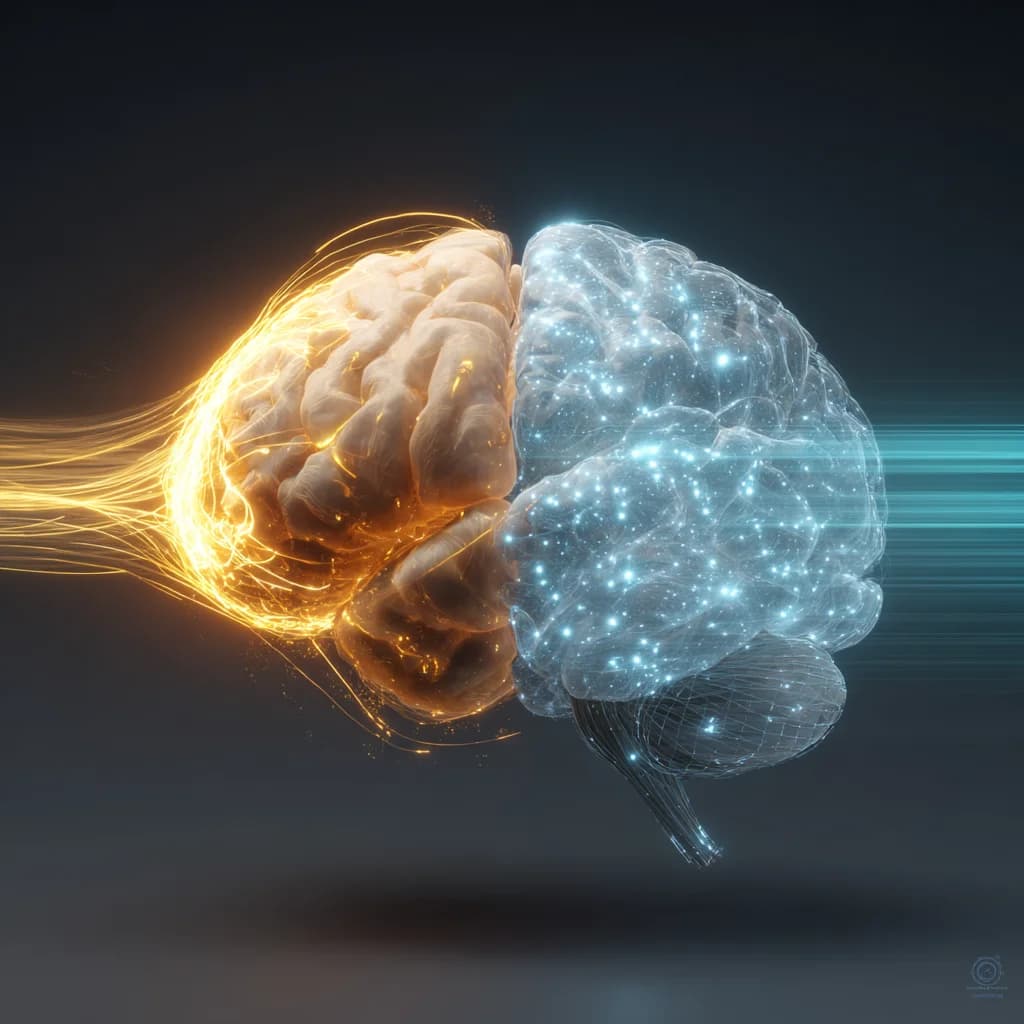
Mind uploading: If we upload a brain to a computer, does the upload have subjective experience? The simulation might behave identically to the original while experiencing nothing.
Moral status: If we can't verify consciousness, how do we assign moral status to AIs, uploads, or enhanced beings?
These questions may remain philosophical puzzles for now, but they'll become practical decisions as technology advances.
Related Concepts


Thinkers Exploring This

Related Articles