Key Points
- •Every transformative technology depends on abundant, cheap energy as its foundation
- •Solar costs dropped 99% since 1976 and continue falling; already the cheapest electricity source in most of the world
- •Fusion reached ignition at NIF in December 2022; private reactors are targeting grid power in the 2030s
- •AI data centers are among the fastest-growing sources of electricity demand
- •Energy abundance is the prerequisite for post-scarcity: free energy makes everything downstream cheaper
The Universal Currency
Energy is the universal currency of physics. Every computation requires energy. Every material transformation requires energy. Every form of work, whether biological or mechanical, requires energy. Civilization is fundamentally an energy-processing system, and the amount of energy a civilization can harness determines what it can accomplish.
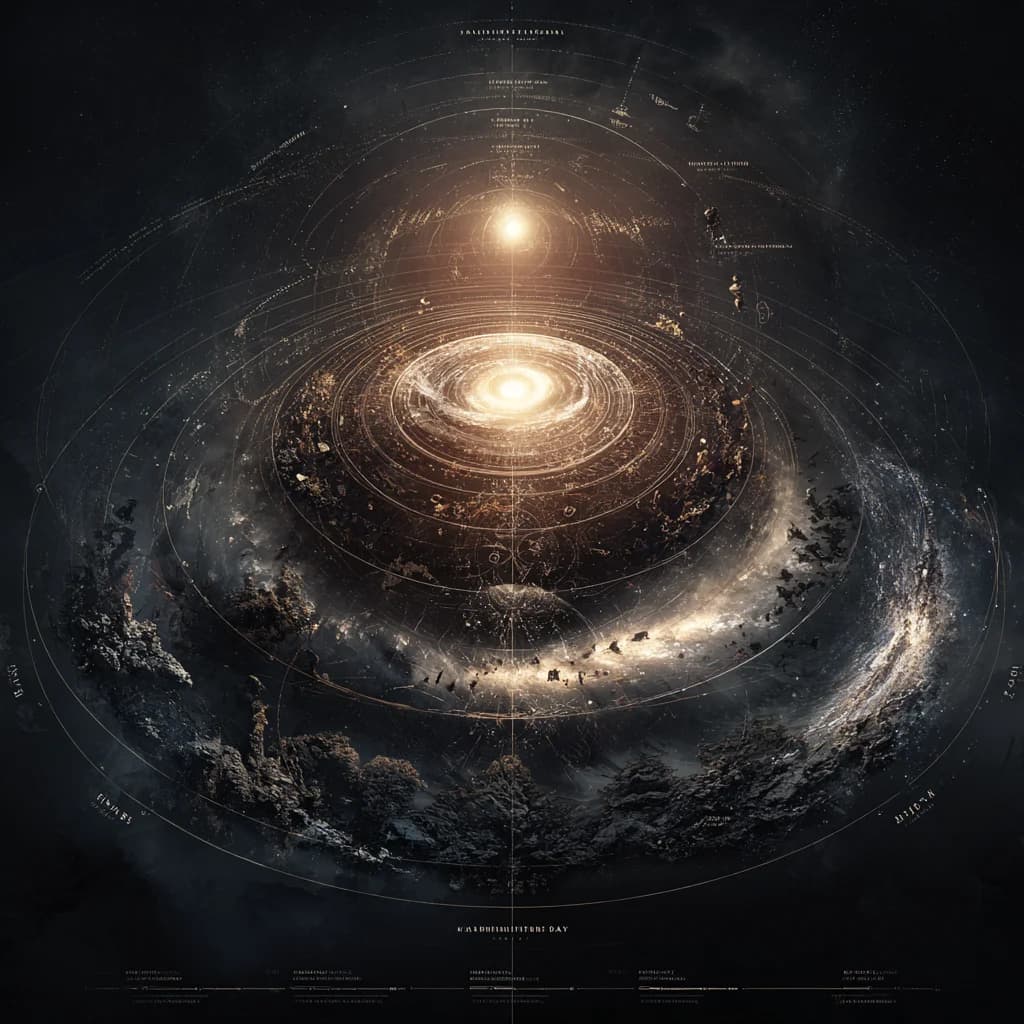
The Kardashev Scale measures civilizations by energy consumption: Type I harnesses all energy reaching its planet, Type II all energy from its star, Type III all energy in its galaxy. Humanity currently uses about 2×10¹³ watts. The sun outputs 3.8×10²⁶ watts. The gap between those numbers is the distance between what we are and what we could become.
The Solar Revolution
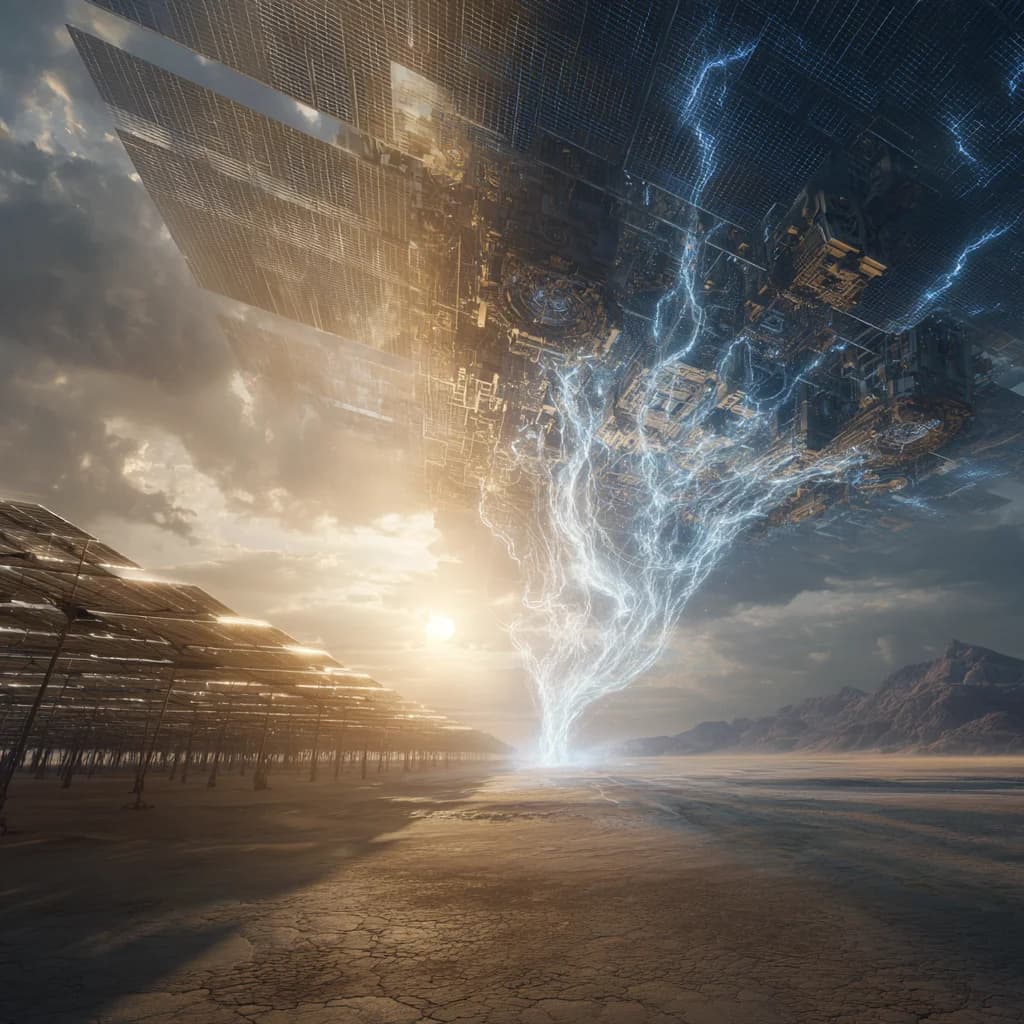
The most important energy trend is already well underway. Solar photovoltaic costs have dropped 99% since 1976, following a learning curve that reduces cost by roughly 20% for every doubling of cumulative installed capacity. Solar is now the cheapest source of new electricity in most of the world, and it continues getting cheaper.
Global solar capacity is growing exponentially. Combined with battery storage costs that have fallen 97% since 1991, solar is becoming viable for baseload power in a growing number of regions. With cost largely solved, the limiting factor is deployment speed.
Wind power follows a similar trajectory, with offshore wind in particular scaling rapidly. Together, solar and wind represented the majority of new electricity generation capacity added globally in recent years.
Fusion: The Endgame
Fusion joins light atomic nuclei and releases energy from the change in their binding energy, the process that powers the Sun. Its fuel comes from water and lithium, and a single gram can release as much energy as more than ten tons of coal. In December 2022, the National Ignition Facility achieved ignition: for the first time, a fusion reaction released more energy than the lasers delivered to its target, and later shots have pushed that target gain above 2.
The next milestone is a power plant that exports more electricity than it consumes, and private companies are racing toward it. Commonwealth Fusion Systems is building its SPARC demonstration device, and Google has agreed to buy power from its first commercial plant; Helion has contracted to supply Microsoft. Fusion does produce some radioactive material, since neutrons activate reactor components, but it is far shorter-lived than fission waste.
Even without fusion, the combination of solar, wind, advanced batteries, and next-generation fission (including small modular reactors) could provide energy abundance within decades.
Energy and AI
AI is becoming one of the largest new sources of electricity demand. The biggest training clusters now draw hundreds of megawatts, and planned campuses are measured in gigawatts. Running inference for billions of users requires massive data centers operating continuously. Data centers are now among the fastest-growing sources of electricity demand.
This creates a tight coupling between energy availability and AI progress. The intelligence explosion requires abundant energy. Every GPU cycle, every training run, every inference call consumes electricity. If energy remains constrained, compute remains constrained, and the pace of AI progress slows.
The good news: AI is also accelerating energy technology. Machine learning is optimizing solar panel designs, improving battery chemistry, accelerating materials discovery for fusion reactors, and managing electrical grids more efficiently. The relationship is symbiotic; AI needs energy, and energy technology needs AI.
Energy and Post-Scarcity
Energy abundance is the prerequisite for post-scarcity. When energy is effectively free, the cost of manufacturing drops (energy is the primary input). When energy is free, desalination provides unlimited fresh water. When energy is free, vertical farming produces food anywhere. When energy is free, recycling and materials synthesis replace mining.
Nearly every resource constraint is, at bottom, an energy constraint. Solve energy and you solve most of the material problems that have defined human civilization since its beginning.
Energy Abundance and the Singularity
The Singularity requires energy at a scale that current infrastructure cannot provide. Superintelligent AI systems running on millions of processors, humanoid robots operating in every home and workplace, nanotechnology assembling products at the molecular level: all of this demands energy far beyond current supply.
The convergence of exponentially cheapening solar, approaching fusion breakthroughs, and AI-optimized energy systems suggests that energy abundance may arrive roughly in parallel with artificial superintelligence. If so, the physical prerequisites for a post-scarcity civilization will be in place precisely when the intelligence to deploy them becomes available.