Key Points
- •Hypothetical material optimized at the atomic level for computation
- •Represents theoretical maximum computational density of matter
- •Every atom configured to contribute to information processing
- •Advanced nanotechnology or femtotechnology would be required
- •A galaxy converted to computronium could support unfathomable intelligence
Matter Optimized for Thinking
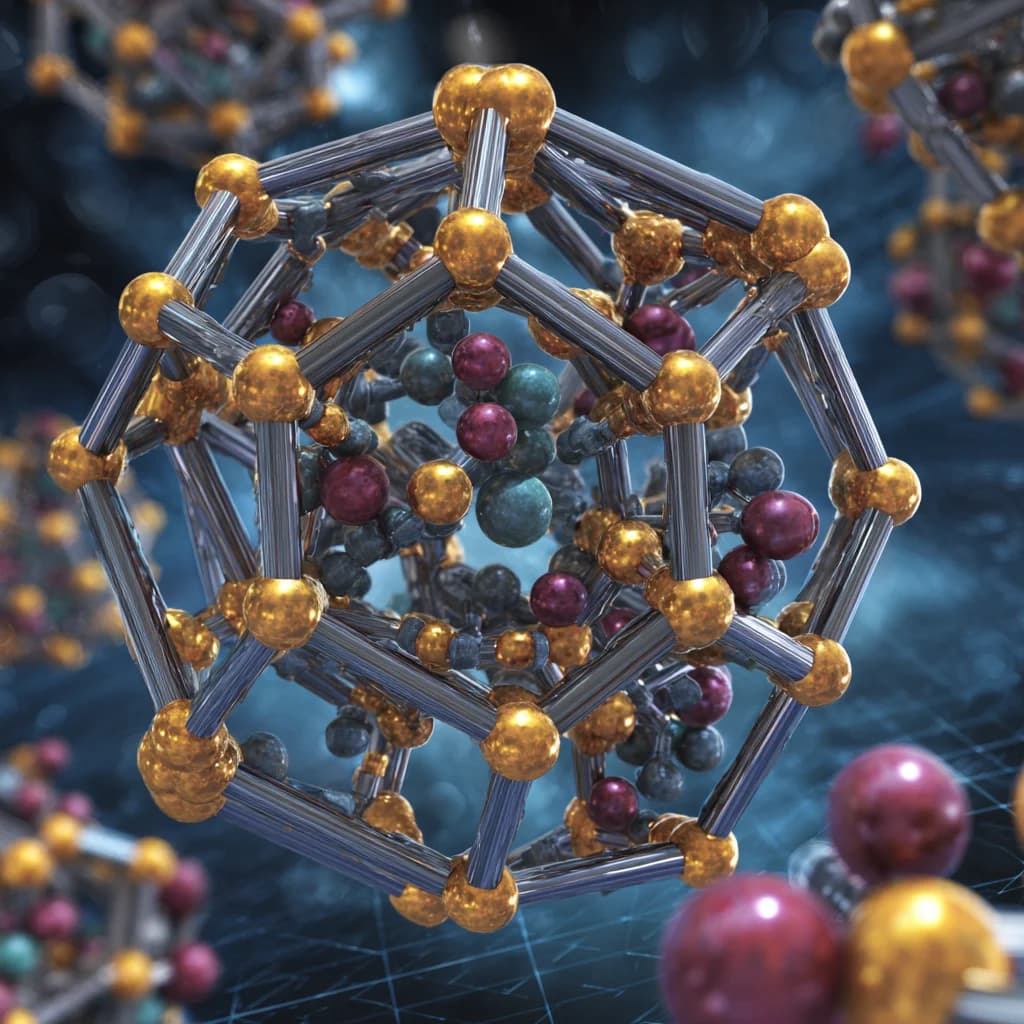
Computronium is a hypothetical material that is optimized at the atomic level for computation. Every atom is configured to contribute to information processing, achieving the theoretical maximum computational density that physics allows.
The concept represents the endpoint of computing hardware evolution: not just faster chips, but matter itself reorganized to think.
Physical Limits
Physicist Seth Lloyd calculated fundamental limits on computation. Any physical system is bounded by:
Energy: More energy enables more state changes (computations) per unit time.
Mass: More mass provides more possible states to encode information.
Speed of light: Information cannot propagate faster than light, limiting how quickly distant parts of a computer can coordinate.
Within these limits, the maximum computational capacity is about 10⁵⁰ operations per second per kilogram of matter, though achieving this requires operating at extremely high temperatures.
Computronium would approach these limits, a kilogram of it might outperform all computers ever built by humanity.
How It Might Work
We can only speculate about computronium's architecture:
Nanotechnology: Molecular-scale logic gates and wiring, built by molecular assemblers, with every cubic nanometer contributing to computation.
Quantum computing: Exploiting quantum effects for massive parallelism, potentially encoding information in quantum states of individual atoms.
Reversible computing: Avoiding the thermodynamic costs of erasing information by using reversible logical operations.
Novel physics: Technologies beyond our current understanding, perhaps manipulating spacetime itself for information processing.
Existential Implications
An intelligence with access to computronium could convert all available matter into thinking substrate. A superintelligent AI with this capability might reshape planets, solar systems, or eventually galaxies into vast computational structures.
This raises both utopian and dystopian possibilities. A benevolent superintelligence might use computronium to simulate paradises for all sentient beings. A misaligned one might convert Earth to computronium while pursuing goals incompatible with human survival.
The Universe as Computer
Some physicists speculate that the universe itself might be a form of computronium, that reality is fundamentally computational. In this view, matter and energy are already doing the maximum possible computation, and "computronium" is just reconfiguring what already computes into something we can use.