Key Points
- •Hypothetical scenario where self-replicating nanobots consume all matter on Earth
- •Coined by Eric Drexler in Engines of Creation (1986)
- •Nanobots designed to replicate could spread exponentially if uncontrolled
- •Drexler later argued this scenario is unlikely with proper safeguards
- •Illustrates risks of powerful self-replicating technologies
The Replicator Apocalypse
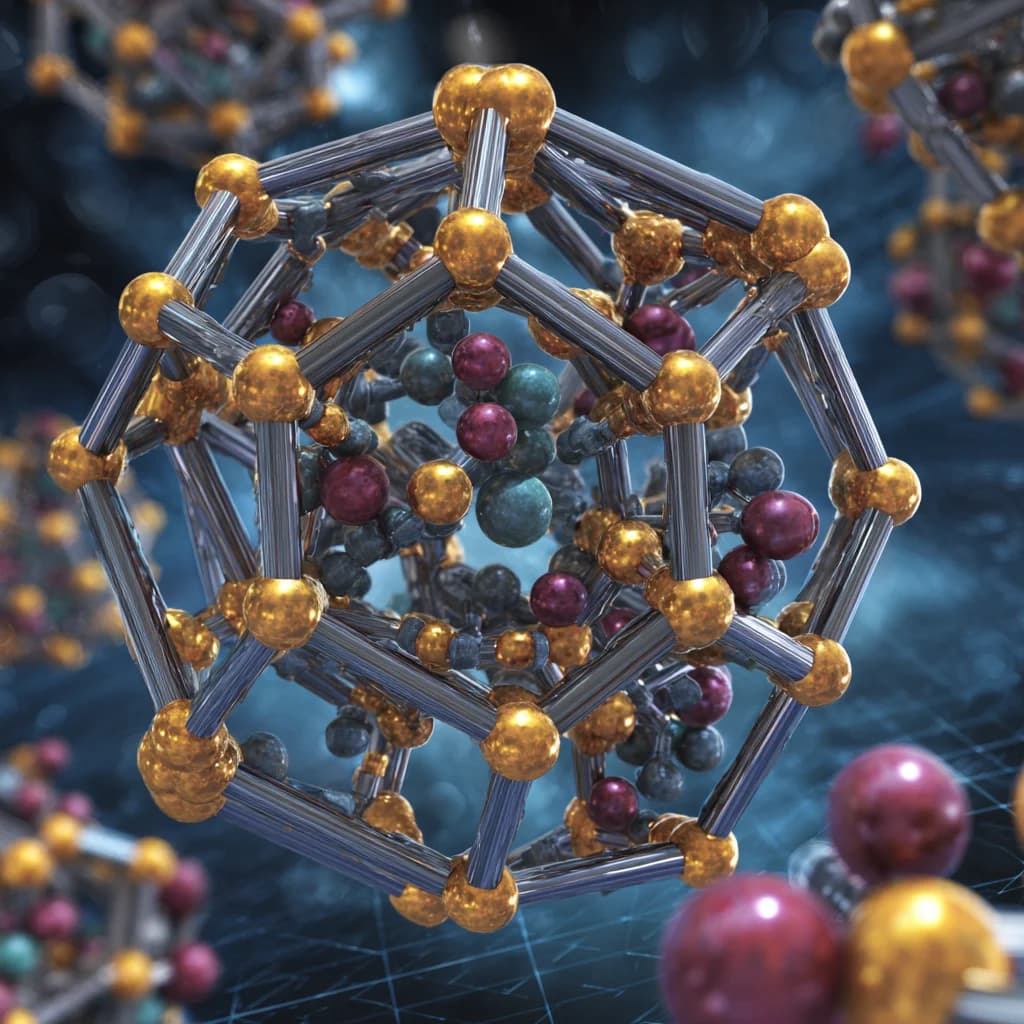
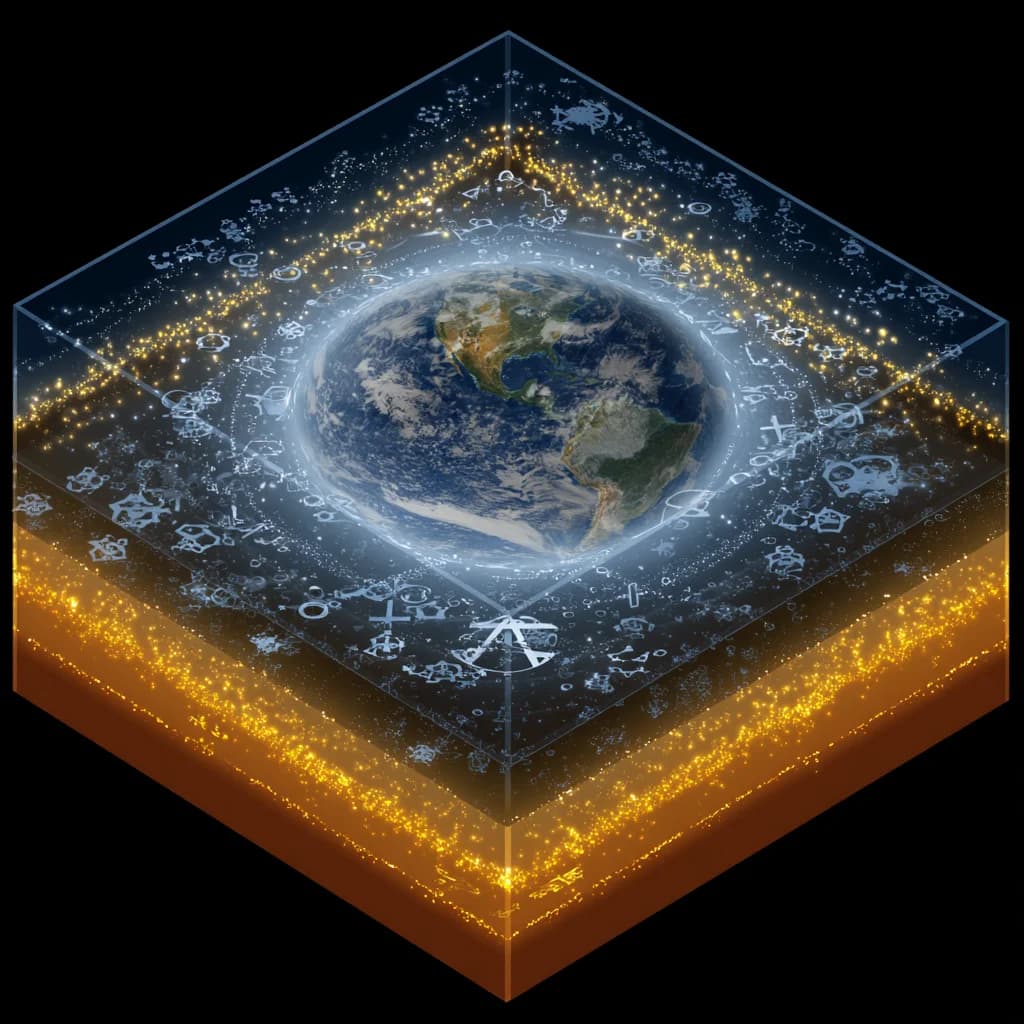
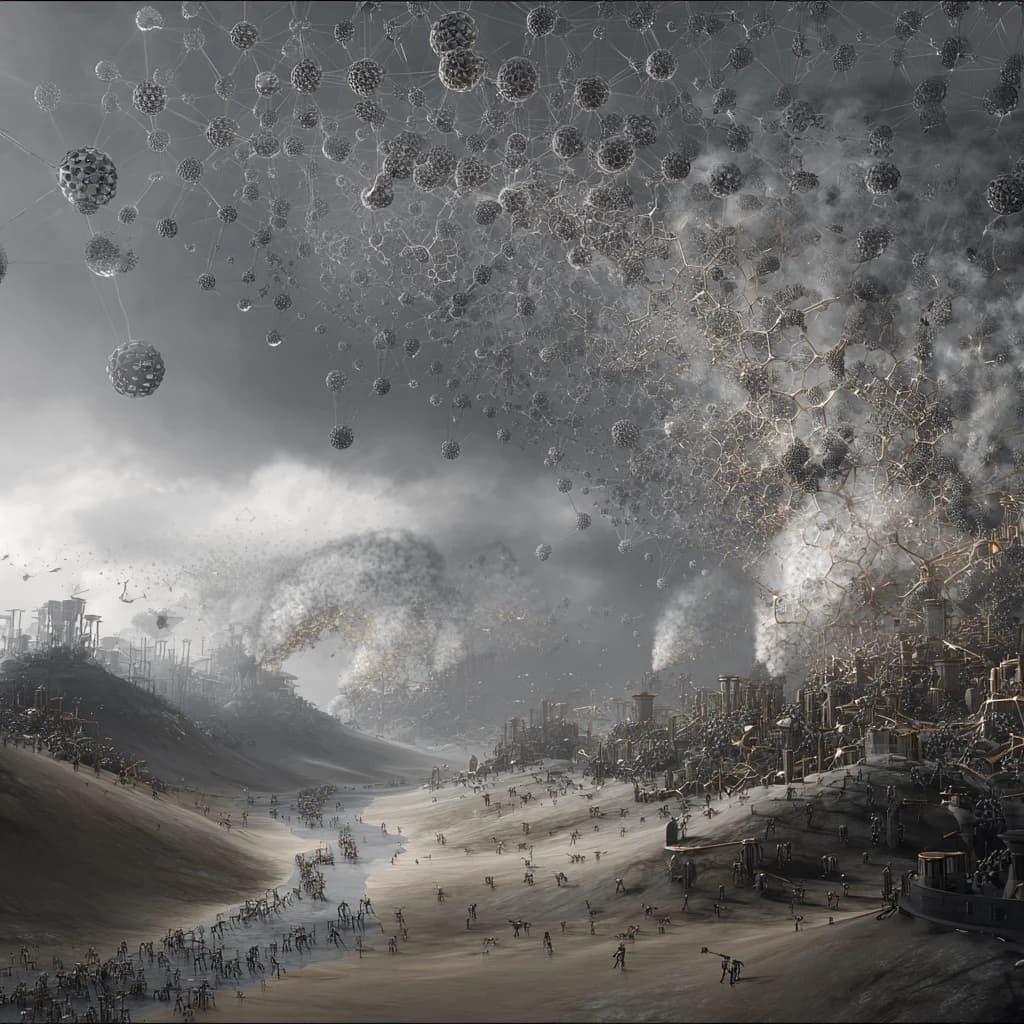
Grey goo is a hypothetical end-of-the-world scenario involving molecular nanotechnology. Self-replicating nanobots, designed or accidentally released, consume all matter on Earth to make more copies of themselves, reducing the planet to a mass of grey nanomachines.
The term was coined by Eric Drexler in his 1986 book Engines of Creation, though he later argued the scenario was unlikely and regretted that it dominated discussions of nanotechnology.
How It Would Work
A grey goo scenario requires nanobots that can:
1. Harvest raw materials: Break down existing matter into component atoms
2. Self-replicate: Build copies of themselves from harvested materials
3. Operate autonomously: Function without external control
4. Spread: Move to new locations to continue replicating
Such nanobots would reproduce exponentially. If each nanobot made one copy per minute, starting with one, you'd have:
- 2³⁰ (about a billion) in 30 minutes
- 2⁶⁰ (about 10¹⁸) in an hour
- Enough to consume the Earth's mass in days
Why It's Probably Not a Concern
Drexler and most nanotechnology researchers now consider grey goo implausible:
Energy requirements: Self-replication requires energy. Solar-powered or chemically-powered nanobots would replicate slowly, giving time to respond.
Thermodynamic limits: Replication generates waste heat. Fast replication would cook the nanobots.
Environmental challenges: A nanobot that can process any material in any environment would be extraordinarily complex, likely impossible to design.
Simpler threats exist: If you have nanotechnology advanced enough for grey goo, you have far more effective weapons. No military would choose grey goo over targeted nanobots.
Design requirements: Grey goo would need to be specifically designed for destruction. Useful nanobots wouldn't have this capability.
The Real Nanotechnology Risks
While grey goo is unlikely, nanotechnology poses genuine concerns:
Targeted nanoscale weapons: Designed to attack specific materials, individuals, or infrastructure
Manufacturing disruption: Radical abundance could destabilize economies
Surveillance: Nanoscale sensors enabling ubiquitous monitoring
Biological interactions: Nanoparticles in the body with unknown long-term effects
Legacy of the Concept
Grey goo's greatest impact has been cultural. It shaped public perception of nanotechnology, influenced science fiction, and provided a template for thinking about self-replicating technology risks, including AI systems that might self-improve in similarly exponential fashion.