Key Points
- •Distributed networks of GPUs coordinated by crypto token incentives rather than corporate ownership
- •Aggregates idle and underused GPUs worldwide into a shared, open market for compute
- •Often cheaper than hyperscale clouds for inference, rendering, and fine-tuning workloads
- •Globally distributed training runs have already produced models with tens of billions of parameters
- •Frontier pretraining still favors tightly interconnected clusters, a gap that communication-efficient training is narrowing
The GPU Bottleneck
Compute is the fuel of the intelligence explosion, and access to it is concentrated. The largest clusters take billions of dollars, gigawatts of power, and years of construction, which puts frontier-scale capacity in the hands of a few companies. Meanwhile, large amounts of GPU capacity sit idle or underused in data centers, former crypto mines, research labs, and gaming rigs around the world.
The Decentralized Alternative
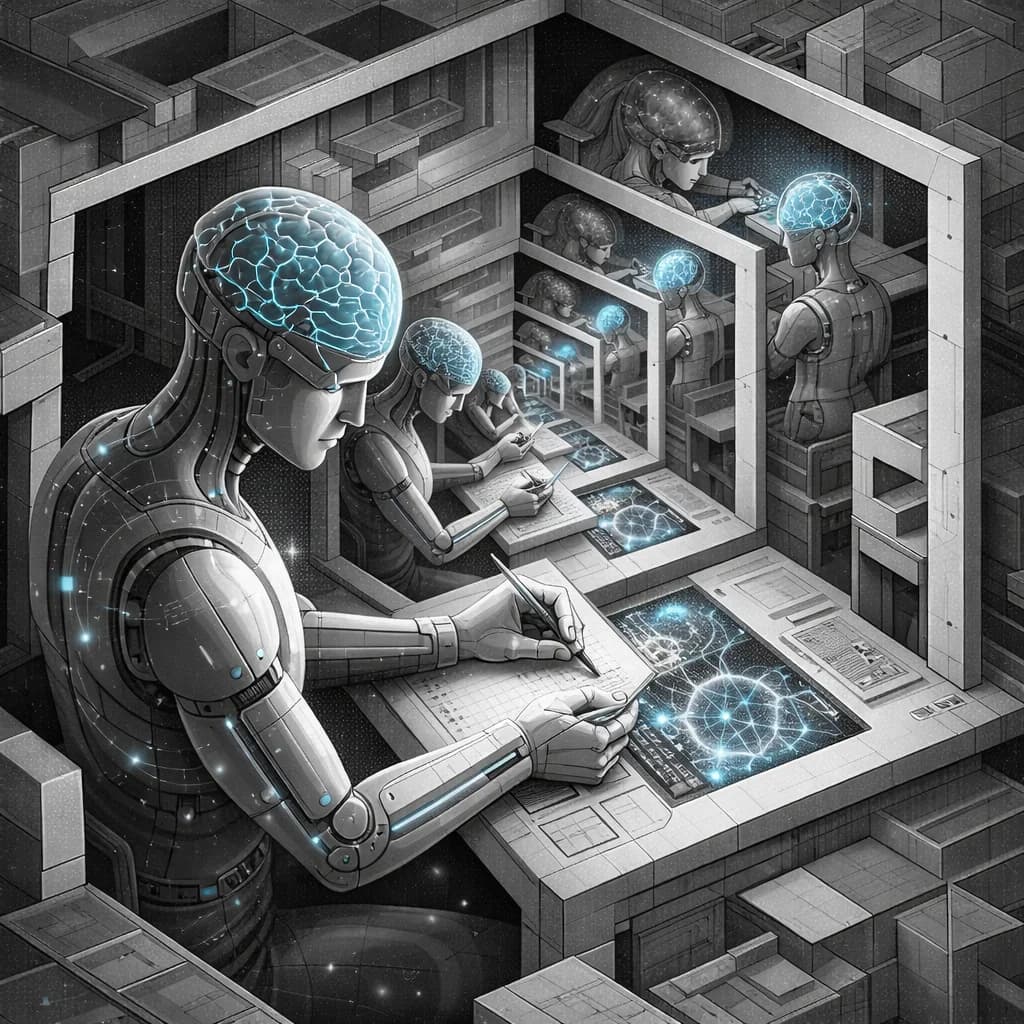
Decentralized compute networks aggregate that scattered capacity into an open market, using token incentives to recruit providers and blockchain-based settlement to pay them. Anyone with a GPU can sell cycles; anyone with a workload can buy them.
The hard problems are verification and trust: proving that a remote machine actually ran the computation correctly, and protecting the data it touched. Hardware attestation and cryptographic verification are where the field is pushing hardest.
The Networks
Akash Network runs an open marketplace for cloud compute, including GPUs, with a public GPU availability API showing live inventory and pricing.
Render Network began as a marketplace for GPU rendering and has expanded toward AI workloads, as described in its knowledge base.
Aethir offers a distributed GPU cloud for AI and gaming, described in its product documentation.
Distributed training is the frontier. In late 2024, Prime Intellect trained INTELLECT-1, a 10-billion-parameter model, on GPUs spread across multiple continents, and followed it in 2025 with INTELLECT-2, a 32-billion-parameter reasoning model trained through globally distributed reinforcement learning. Communication-efficient methods such as DiLoCo cut the bandwidth needed to train across ordinary internet links.
DePIN: The Broader Category
Decentralized compute is part of a broader category called DePIN, Decentralized Physical Infrastructure Networks. DePIN projects use token incentives to build real-world infrastructure: compute, storage, wireless coverage, energy, mapping.
The model is the same across all of them: reward early contributors with tokens for building physical infrastructure that no single company would fund on its own.
Why Decentralization Matters for AI
Centralized compute creates concentration risk. A small number of cloud providers control the infrastructure that the entire AI industry depends on. They choose who gets access, at what price, under what terms. This creates dependencies that become dangerous as AI becomes more consequential.
Open markets for compute spread that power out. They still depend on shared chip suppliers and regional power grids, but they remove the single gatekeeper deciding who may train and run models.
Decentralized Compute and the Singularity
The intelligence explosion requires compute that scales faster than any single organization can build. Token-incentivized networks unlock existing GPU capacity worldwide, converting idle hardware into productive infrastructure through economic incentives. The result is a compute substrate that grows with demand, operates without gatekeepers, and makes no distinction between researchers at a frontier lab and an independent developer working from a laptop. This is how the intelligence explosion gets its fuel.