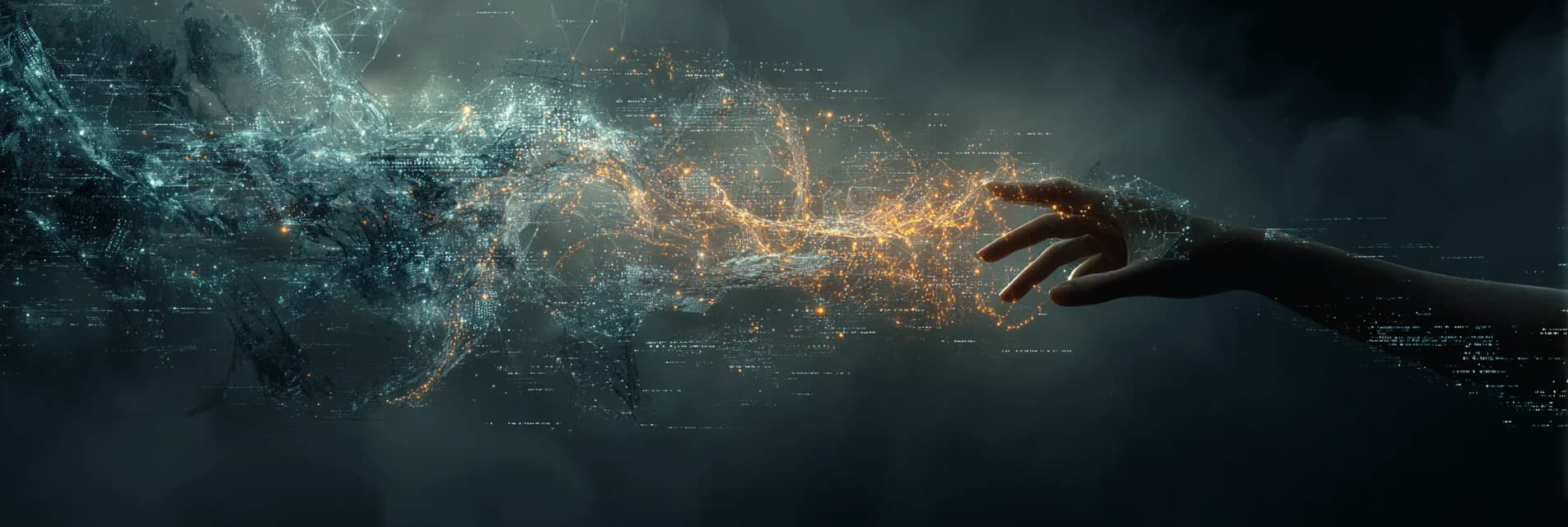
For sixty years, software has meant the same thing: instructions written by humans, executed by machines. Programmers translate human intent into code. Code runs on hardware. The machine does exactly what it is told, nothing more.
AI agents change this at the most fundamental level. They do not execute instructions; they pursue goals. They do not require explicit programming; they figure out what to do. The relationship between human and machine is no longer author and executor. It is more like manager and employee, or even collaborator and collaborator.
This is the end of software as we have known it.
What Agents Actually Are
An AI agent is a system that can perceive its environment, reason about what to do, take actions, and learn from the results. This sounds abstract until you see it in practice.
I am writing this article with the assistance of Claude Code, an AI agent that can read files, write code, run commands, search the web, and maintain context across a complex task. When I ask it to add a feature to my website, it does not generate a code snippet for me to copy and paste. It reads my codebase, understands the architecture, writes the implementation, runs the tests, and commits the changes. I review the result. Often I accept it without modification.
This is qualitatively different from autocomplete or code generation. The agent is doing the work. I am directing and reviewing.
The Inversion
Traditional software development works like this: a human understands a problem, designs a solution, writes code that implements the solution, tests it, deploys it, and maintains it. Each step requires human cognition. The software itself is inert; it does exactly what the code specifies.
Agent-based development inverts this. The human specifies what they want. The agent figures out how to achieve it. The human reviews and approves. The agent executes.
This inversion has profound implications.
First, the bottleneck shifts from implementation to specification. Writing code is no longer the hard part; knowing what you want is the hard part. The skill that matters is the ability to clearly articulate goals and evaluate whether they have been achieved.
Second, the value of existing software changes. Why maintain a complex codebase when an agent can regenerate functionality on demand? Why build a general-purpose tool when an agent can create a bespoke solution for each use case? The permanence of software, the idea that you write it once and run it forever, becomes less relevant when creation is cheap.
Third, the nature of software companies changes. A software company has traditionally been an organization that builds and maintains code. If agents can build code, what is the company actually providing? The answer shifts toward data, integration, trust, and the specification of what to build. The code itself becomes a commodity.
The Current Moment
The transition is further along than most people realize. The agents I use daily already handle tasks that would have required a senior developer two years ago. They read codebases, understand context, make architectural decisions, and ship working code. The mistakes they make are the kinds of mistakes humans make: misunderstanding requirements, overlooking edge cases, making suboptimal choices. These are not fundamental limitations. They are capability gaps that close with each model generation.
The improvement curve is steep. Claude Code today versus six months ago is not incremental progress; it is a step change in reliability and autonomy. Extrapolate this curve and the destination becomes clear.
The pattern from other AI domains is instructive. Chess AI went from "interesting but beatable" to "superhuman" in a few years. Image generation went from "blurry and wrong" to "indistinguishable from photography" in eighteen months. Protein folding went from "unsolved for fifty years" to "effectively solved" in one model release. Coding agents are on the same trajectory. The only question is timing.
By 2028, most routine software development will be agent-driven. Not just code completion, but the entire workflow: requirements analysis, architecture decisions, implementation, testing, deployment, maintenance. Human developers will specify intent and review output. The volume of agent-written code will exceed human-written code. This is not a prediction about distant futures; it is an extrapolation of capabilities that exist today.
By 2030, the distinction between "using software" and "having software built for you" will collapse. When you can describe what you want and have an agent build it in minutes, packaged software becomes an anachronism. Why use a generic spreadsheet when an agent can build a custom tool for your exact workflow? Why learn an application's interface when an agent can create an interface designed for how you think? The entire concept of "learning to use software" becomes obsolete when software learns to fit you.
The Economic Implications
Software is a trillion-dollar industry. Millions of people work as programmers, and millions more work in adjacent roles: product management, quality assurance, technical writing, developer relations. What happens to these jobs when agents can do the work?
The pessimistic view is that agents substitute for human labor. Companies that employed fifty developers employ five, plus agents. The productivity gains accrue to capital rather than labor. Most programmers find their skills commoditized. This is framed as a crisis.
The optimistic view, and the correct one, is that AI will replace all human labor. Not just programming, but every form of cognitive and physical work. This is not a bug; it is the goal. The entire point of technology is to free humans from toil. Software development is simply one of the first knowledge-work domains to be automated because AI systems can directly interface with code.
The transition will be disruptive. But the destination is a world where the question "what do you do for work?" becomes as archaic as "what guild do you belong to?" When intelligence and labor are abundant, humans are free to pursue meaning, creativity, and growth on their own terms.
The Singularity Connection
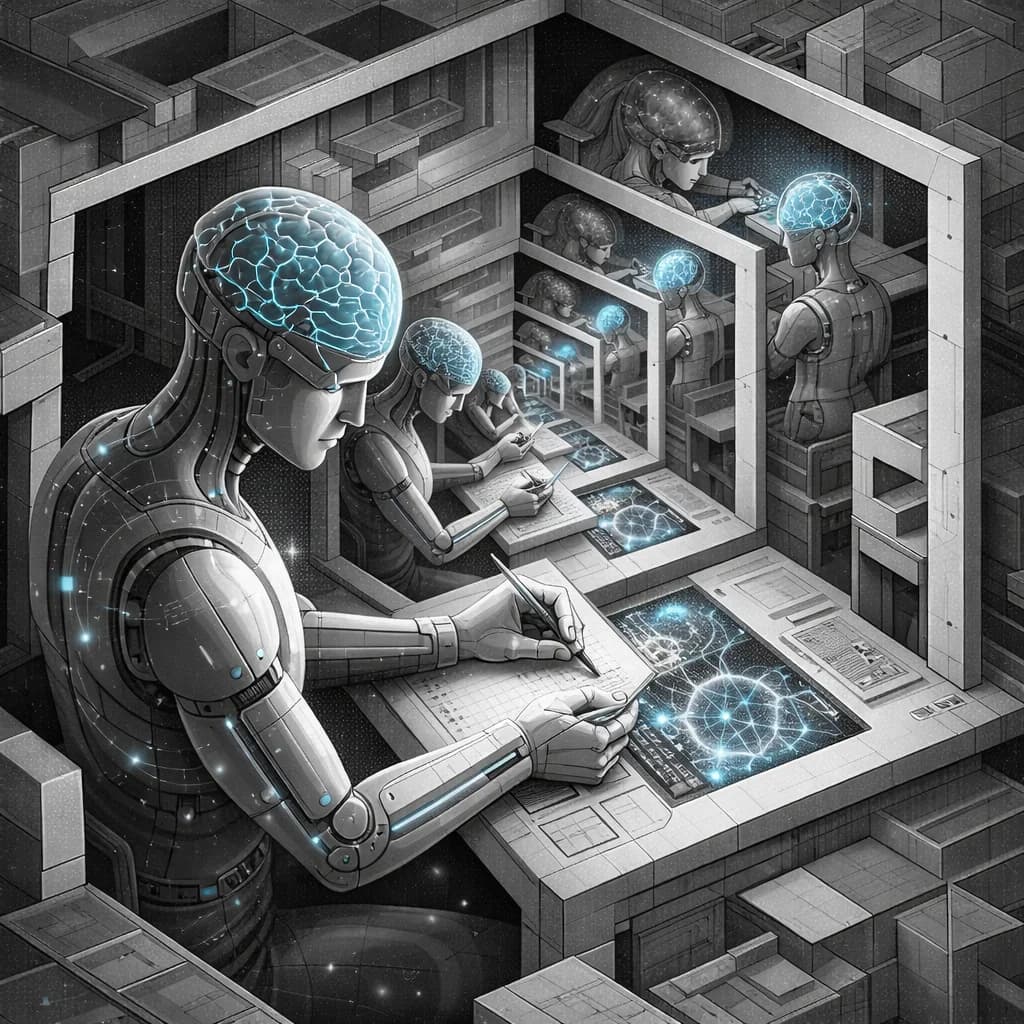
AI agents are a step toward recursive self-improvement, the mechanism at the heart of the Singularity.
When agents can write code, they can write AI code. When they can improve software systems, they can improve themselves. The feedback loop that drives the intelligence explosion runs through agent capabilities.
We are already seeing this. AI systems help design the neural network architectures for the next generation of AI systems. AI agents write the training code, manage the infrastructure, and analyze the results. The humans are still in the loop, but the loop is increasingly automated.
As agents become more capable, this process accelerates. The gap between "agent that can write software" and "agent that can improve AI systems" is not large. The gap between "agent that can improve AI systems" and "agent that can improve itself" is smaller still.
This is why I find agents so significant. They are not merely a productivity tool. They are a manifestation of the transition I have been writing about for twenty years. The intelligence explosion is not an abstract future event; it is the concrete reality of AI systems that can create and improve AI systems.
What To Do
If agents represent the end of software as we know it, how should you respond?
If you are a developer, learn to work with agents now. The skills that matter are shifting from "write correct code" to "specify intent clearly" and "evaluate results effectively." Developers who can direct agents will be more valuable than developers who compete with them.
If you run a business, start integrating agents into your workflows. The companies that figure out how to use agents effectively will have significant advantages over those that do not. This is not about replacing employees; it is about amplifying what your organization can accomplish.
If you are thinking about the long term, recognize that this transition is part of a larger pattern. Software is becoming abundant. Intelligence is becoming abundant. The constraints that have shaped our world are loosening. The question is not whether this will happen, but how we will adapt to a world where creation is cheap and direction is what matters.
The View From Here
I built my first website in 1998. I have been writing software professionally for over two decades. I have seen technologies come and go, hype cycles rise and fall, paradigm shifts that were supposed to change everything. None of them were like this.
The agents I use today can write all the code. Not "most of the code" or "simple code." All of it. I describe what I want, and the agent builds it. I review the result, request changes, and approve. The entire website you are reading was built this way. The agent reads the codebase, understands the architecture, implements features, runs tests, and commits changes. I have not written a line of code by hand in months.
The end of software does not mean the end of creation. It means the democratization of creation. Anyone who can articulate what they want can now build it. The barrier between "having an idea" and "having a working implementation" has collapsed. Programming skill is no longer the bottleneck. Clarity of vision is.
This is what the Singularity looks like from the inside. Not a dramatic event, but a gradual transformation in what is possible. Not a threshold we cross, but a ramp we climb, accelerating.
By the time most people realize what has happened, it will already be over. Software development as a human profession will be a historical curiosity, like typesetting or switchboard operation. The only question is whether that happens this year or next.
Related Concepts

Related Articles