Key Points
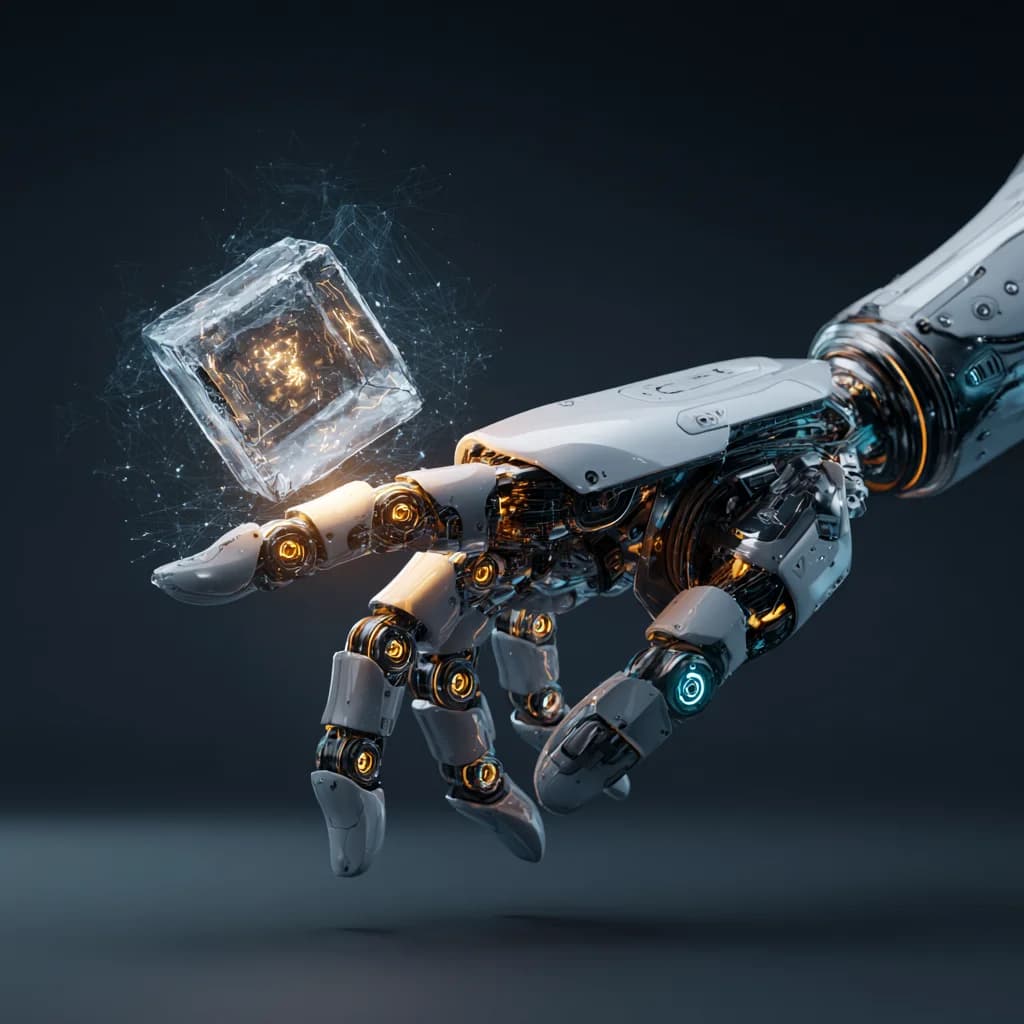
- •AI systems with physical bodies that can perceive, navigate, and manipulate the real world
- •Humanoid robots from Figure, Tesla, Boston Dynamics, and others are deploying in factories and warehouses
- •Physical embodiment may be necessary for AI to develop robust common-sense reasoning
- •Bridges the gap between digital intelligence and physical reality
- •Accelerating rapidly: costs dropping, capabilities compounding with foundation models
The Substrate Assembles
For decades, AI lived behind screens. It could beat grandmasters at chess, generate photorealistic images, and write code better than most engineers. What it could not do was pick up a coffee cup without shattering it. That gap is closing fast.
A central challenge is transfer: a robot should be able to learn a useful behavior without memorizing the room where it was taught. A household task combines perception, balance, movement, and manipulation, all while objects and surroundings change. Research on generalization to unfamiliar homes illustrates the goal: learn from broad experience, then adapt that knowledge to the physical situation in front of the robot.
Why Bodies Matter
There is a strong argument that true general intelligence requires a body. Humans do not learn physics from textbooks; we learn it by dropping things, stumbling, catching balls. Embodied cognition research suggests that abstract reasoning is grounded in physical experience, that concepts like "weight," "resistance," and "balance" gain meaning through interaction with matter.
For AI, embodiment provides a training signal that no amount of text or video can replicate. A robot that has pushed, pulled, and broken thousands of objects develops an intuitive physics that pure language models approximate but do not possess.
The Convergence
What makes this moment different from previous waves of robotics hype is convergence. Vision-language models give robots the ability to understand spoken instructions and map them to physical actions. Sim-to-real transfer lets robots train in simulated environments and deploy learned skills in the real world. Hardware costs are following their own exponential curve downward.
These approaches expand the tasks a robot can learn. The remaining work is reliability: proving safety, dexterity, and error recovery in homes and workplaces the robot has never seen.
What Embodied AI Unlocks
Once intelligence can act on the physical world at scale, everything changes. Manufacturing becomes fully autonomous. Elder care, surgery, construction, agriculture, and disaster response gain tireless, precise workers. The bottleneck shifts from "can we build it?" to "how fast can we deploy it?"
Embodied AI is also the bridge to molecular nanotechnology. Before nanobots can assemble matter atom by atom, we need AI systems that understand physical manipulation at every scale. Each generation of robot dexterity brings that frontier closer.